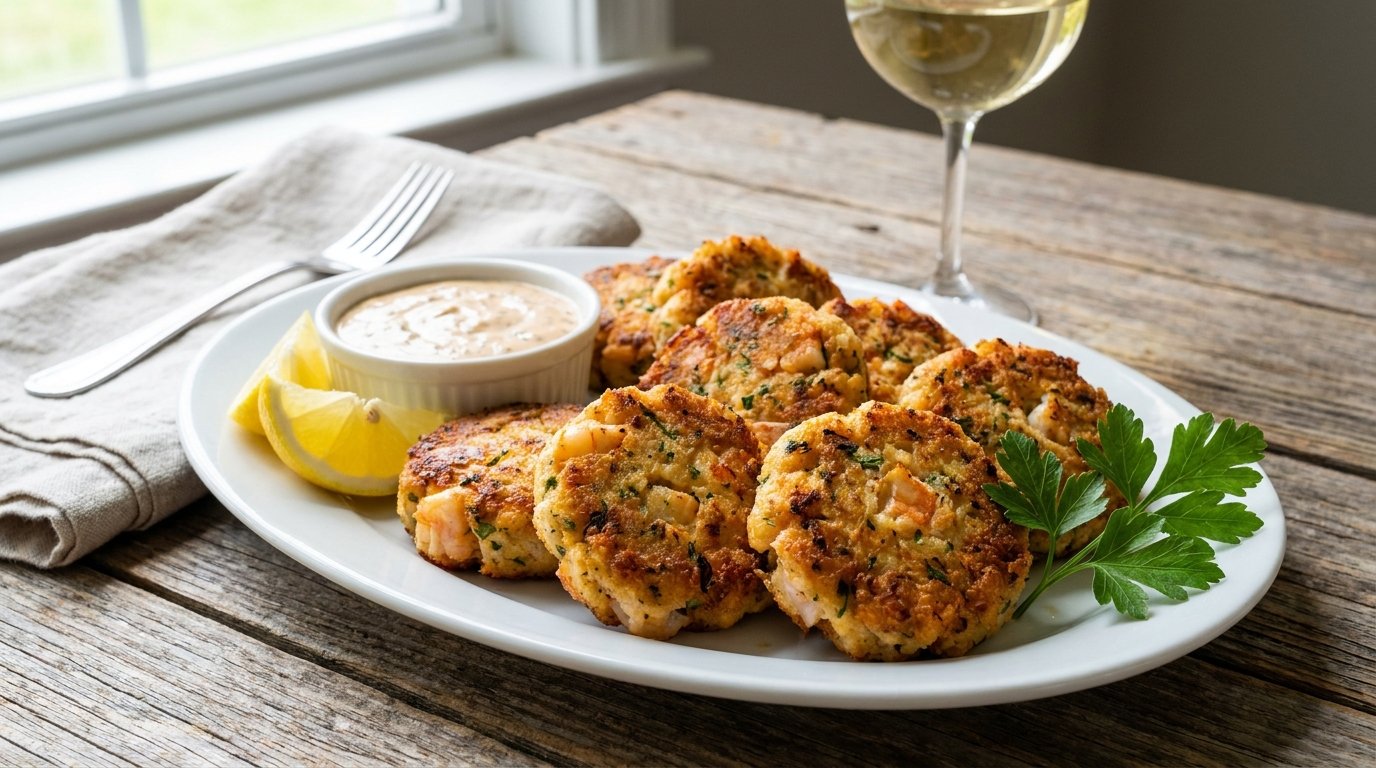
Classic Baked Shrimp Cakes: Crispy, Flavorful and Easy to Make
Classic Baked Shrimp Cakes are a delicious way to enjoy seafood in a simple, comforting, and healthier format. These golden shrimp patties combine tender chopped shrimp with fresh herbs, seasonings, breadcrumbs, and a few simple ingredients that create a perfect balance of flavor and texture. Unlike deep-fried versions, baked shrimp cakes offer a lighter option while still delivering a satisfying crispy exterior and a moist, flavorful center.
Shrimp cakes are incredibly versatile. They can be served as a main dish with a fresh salad, enjoyed as an appetizer with dipping sauce, or prepared ahead for quick meals throughout the week. The combination of sweet shrimp, aromatic garlic, fresh parsley, and a hint of lemon creates a bright seafood flavor that does not feel heavy. Baking them in the oven allows the shrimp cakes to develop a beautiful golden crust while keeping the inside tender.
The key to making great shrimp cakes is choosing quality shrimp and avoiding excess moisture. Too much liquid can prevent the cakes from holding together properly. With the right balance of ingredients and a gentle baking method, you can create restaurant-style shrimp cakes right in your own kitchen.
Why You’ll Love These Baked Shrimp Cakes
One of the best things about baked shrimp cakes is how easy they are to prepare. Unlike many seafood recipes that require special techniques, these patties come together with basic pantry ingredients and a simple mixing process. Once the mixture is prepared, the oven does most of the work.
They are also a great way to add more seafood to your meals. Shrimp provide a naturally sweet flavor and a firm texture that works beautifully in patties. When combined with herbs, spices, and breadcrumbs, they become a flavorful dish that feels both casual and elegant.
Another advantage is that these shrimp cakes are easy to customize. You can make them spicy with chili flakes, give them an Asian-inspired flavor with ginger and soy sauce, or keep them classic with lemon, garlic, and herbs. The basic recipe provides a reliable foundation for countless variations.
Classic Baked Shrimp Cakes Recipe
Ingredients for 4 servings
- 500 g raw shrimp, peeled and deveined
- 1 cup breadcrumbs
- 1 large egg
- 3 tablespoons mayonnaise
- 2 tablespoons fresh parsley, chopped
- 2 tablespoons green onion, finely sliced
- 2 garlic cloves, minced
- 1 teaspoon Dijon mustard
- 1 teaspoon lemon zest
- 2 tablespoons lemon juice
- 1 teaspoon paprika
- 1/2 teaspoon seafood seasoning or Old Bay-style seasoning, optional
- Salt
- Black pepper
- 2 tablespoons olive oil
For serving (optional)
- Lemon wedges
- Tartar sauce
- Garlic yogurt sauce
- Fresh salad
- Roasted vegetables
Preparation
Begin by preparing the shrimp. Rinse them briefly under cold water and pat them completely dry with paper towels. Removing excess moisture is important because watery shrimp can make the mixture too soft and difficult to shape.
Chop about half of the shrimp into small pieces. Leave the remaining half slightly larger and roughly chopped. This combination creates the ideal texture: some shrimp pieces blend into the mixture while larger pieces provide noticeable bites of seafood.
Place the shrimp in a large bowl. Add the breadcrumbs, egg, mayonnaise, parsley, green onion, garlic, Dijon mustard, lemon zest, lemon juice, paprika, seafood seasoning if using, salt, and pepper.
Mix everything gently until combined. Avoid overmixing because it can make the shrimp cakes dense rather than tender. The mixture should hold together when pressed between your fingers.
Cover the bowl and refrigerate for about 20 to 30 minutes. This resting time allows the breadcrumbs to absorb moisture and makes shaping the cakes much easier.
Preheat your oven to 200°C. Line a baking sheet with parchment paper and lightly brush it with olive oil.
Shape the shrimp mixture into small patties, about 7 to 8 cm wide and 2 cm thick. Place them on the prepared baking sheet and lightly brush the tops with olive oil.
Bake for 15 to 20 minutes, flipping halfway through if desired. The shrimp cakes should become golden on the outside and cooked through in the center.
Serve warm with lemon wedges and your favorite sauce.
How to Make Shrimp Cakes Hold Together
The most common problem when making shrimp cakes is that they fall apart during cooking. The solution is usually a proper balance between moisture and binding ingredients.
Breadcrumbs help absorb extra liquid while the egg acts as a natural binder. The mayonnaise adds richness and keeps the cakes from becoming dry. Refrigerating the mixture before shaping is another important step because it allows the ingredients to firm up.
If the mixture still feels too loose, add a small amount of additional breadcrumbs. Add them gradually because too many breadcrumbs can overpower the delicate shrimp flavor.
Another useful tip is to avoid making the patties too thin. A thicker shrimp cake will stay moist inside and maintain a better texture after baking.
Tips for Perfectly Baked Shrimp Cakes
The quality of the shrimp makes a noticeable difference. Fresh shrimp are excellent, but good-quality frozen shrimp work just as well. If using frozen shrimp, thaw them completely and remove any excess water before preparing the mixture.
Do not overcook the shrimp cakes. Shrimp cook quickly, and excessive heat can make them rubbery. The cakes are ready when the center is firm and the shrimp have turned opaque.
For a crispier exterior, lightly spray the shrimp cakes with oil before baking. You can also place them under the broiler for the final minute or two, watching carefully to prevent burning.
A hot oven is important because it allows the outside to brown while keeping the inside juicy.
Flavor Variations to Try
The classic lemon-garlic version is delicious, but shrimp cakes are easy to adapt.
For a spicy version, add chopped jalapeño, cayenne pepper, hot sauce, or crushed red pepper flakes. A little heat pairs beautifully with the sweetness of shrimp.
For an Asian-inspired variation, replace parsley with cilantro, add fresh ginger and a splash of soy sauce, and serve with a spicy mayo dip.
For a Mediterranean twist, mix in chopped basil, oregano, feta cheese, and a touch of roasted red pepper.
You can also add finely chopped vegetables such as celery, bell pepper, or carrots. Just make sure they are cut very small so they do not prevent the cakes from holding together.
Best Sauces for Shrimp Cakes
A good sauce can elevate shrimp cakes from simple to impressive. A classic tartar sauce made with mayonnaise, pickles, lemon juice, and herbs is always a great choice.
For a lighter option, mix Greek yogurt with lemon juice, garlic, parsley, and black pepper. This creates a fresh sauce that balances the richness of the shrimp.
A spicy mayo made with mayonnaise and sriracha adds a modern twist. Cocktail sauce also works well, especially if you enjoy a stronger tomato and horseradish flavor.
What to Serve with Shrimp Cakes
These shrimp cakes pair beautifully with fresh and simple sides. A crisp green salad with lemon vinaigrette keeps the meal light and refreshing.
For a more filling dinner, serve them with roasted potatoes, rice, quinoa, or steamed vegetables. They also work wonderfully inside a sandwich or burger-style bun with lettuce, tomato, and sauce.
At a gathering, make smaller versions and serve them as appetizers. They are easy to eat and pair well with a variety of dipping sauces.
Can You Prepare Shrimp Cakes Ahead of Time?
Yes. Shrimp cakes are excellent for meal preparation. You can prepare the mixture several hours in advance and keep it covered in the refrigerator until ready to bake.
You can also shape the patties ahead of time and store them on a lined tray. Bake them when you are ready to serve.
Cooked shrimp cakes can be stored in the refrigerator for up to 2 days. Reheat them in the oven or air fryer to help maintain their texture. The microwave works, but it may soften the exterior.
Can You Freeze Shrimp Cakes?
Absolutely. Shrimp cakes freeze well when properly stored.
For best results, freeze them before baking. Place the shaped patties on a tray and freeze until firm, then transfer them to a freezer-safe container. When ready to cook, bake directly from frozen, adding extra cooking time as needed.
You can also freeze cooked shrimp cakes, although the texture may be slightly softer after thawing.
Conclusion
Classic Baked Shrimp Cakes are proof that seafood recipes can be simple, flavorful, and satisfying without requiring complicated preparation. With tender shrimp, fresh herbs, bright lemon flavors, and a golden baked crust, these cakes offer a perfect balance between comfort and freshness.
They are ideal for busy weeknight dinners, elegant appetizers, or meal prep. The recipe can easily be customized with different spices, herbs, and sauces, making it a versatile dish that you can return to again and again.
Whether served with a crisp salad, roasted vegetables, or a creamy dipping sauce, baked shrimp cakes bring restaurant-quality flavor to your own kitchen.
FAQ
Can I use cooked shrimp instead of raw shrimp?
Yes, but the texture will be slightly different. Chop cooked shrimp carefully and avoid overbaking since the shrimp are already cooked.
Why are my shrimp cakes falling apart?
The mixture may contain too much moisture or not enough binder. Try adding more breadcrumbs and chilling the mixture before shaping.
Can I make shrimp cakes without mayonnaise?
Yes. Replace mayonnaise with Greek yogurt, sour cream, or a small amount of cream cheese for a different texture.
Can I cook shrimp cakes in an air fryer?
Yes. Air fry them at around 190°C for approximately 10 to 12 minutes, flipping halfway through.
What type of breadcrumbs work best?
Panko breadcrumbs create a lighter, crispier texture, while regular breadcrumbs provide a softer, more traditional shrimp cake texture. Both work well.