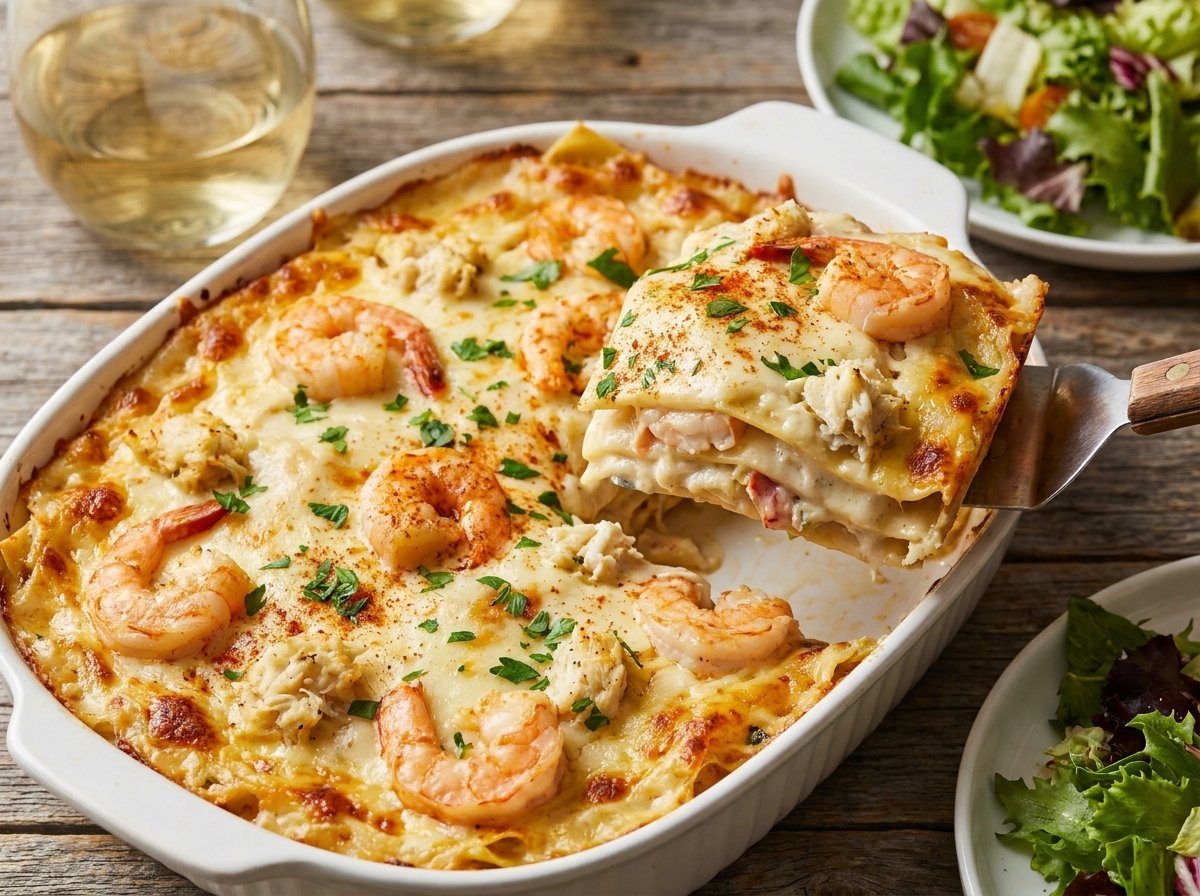
Creamy Seafood Lasagna with Shrimp and Crab
There is something wonderfully comforting about a bubbling pan of lasagna coming out of the oven, but this Creamy Seafood Lasagna with Shrimp and Crab takes that familiar comfort food in a completely different direction. Instead of a traditional tomato-based meat sauce, tender shrimp and sweet crab are layered between silky white sauce, tender lasagna noodles, and plenty of melted cheese. The result is rich without being overwhelmingly heavy, with delicate seafood flavor running through every creamy bite. If you’re looking for a dinner that feels elegant enough for a celebration but comforting enough for a Sunday family meal, this recipe fits beautifully.
The combination of shrimp and crab works especially well because the two seafood ingredients bring different textures and flavors to the dish. Shrimp provides firm, juicy pieces with a subtle sweetness, while crab contributes tender flakes and a slightly richer ocean flavor. Garlic, onion, parsley, lemon, and Italian-style seasonings add freshness and depth, while ricotta, mozzarella, and Parmesan create the creamy, cheesy layers that make lasagna so irresistible. Think of it as classic lasagna dressed for a special occasion: familiar, cozy, and just a little luxurious.
Why This Seafood Lasagna Is So Special
Traditional lasagna gets much of its character from slow-cooked tomato sauce and seasoned meat, but a seafood version relies on a different kind of balance. The sauce needs to be creamy enough to complement the seafood without hiding its flavor. The cheese should add richness without becoming so strong that you can no longer taste the shrimp and crab. And because seafood cooks quickly, the filling should be prepared carefully to keep the shrimp tender rather than rubbery.
This recipe also gives you plenty of flexibility. You can use fresh or properly thawed frozen shrimp, lump crab meat, no-boil noodles, or traditional lasagna sheets. You can even add spinach, mushrooms, or a little chopped red pepper if you want more vegetables in the layers. The basic idea remains wonderfully simple: creamy sauce + seafood + pasta + cheese = an unforgettable baked dinner.
What Makes the Creamy Sauce So Delicious
The white sauce is the backbone of this recipe. A classic béchamel-style base made with butter, flour, and milk gives the lasagna its creamy texture, while garlic and Parmesan add savory depth. For an even richer sauce, a small amount of heavy cream can be incorporated toward the end.
The trick is to keep the sauce thick enough to hold the layers together. If it is too thin, the lasagna can become watery. If it is too thick, it won’t spread easily between the noodles. Aim for a sauce that coats the back of a spoon while still being easy to pour and spread.
Ingredients You’ll Need
Seafood and Cheese Ingredients
- 12 lasagna noodles
- 1 pound shrimp, peeled, deveined, and chopped
- 8 ounces lump crab meat, drained
- 15 ounces ricotta cheese
- 2 cups shredded mozzarella cheese
- ½ cup grated Parmesan cheese
- 1 large egg
- 2 tablespoons chopped fresh parsley
- 2 cloves garlic, minced
- ½ small onion, finely diced
- 1 tablespoon olive oil
- 1 teaspoon Italian seasoning
- ½ teaspoon paprika
- ½ teaspoon black pepper
- Salt, to taste
- 1 tablespoon lemon juice
Ingredients for the Creamy White Sauce
- 4 tablespoons butter
- 4 tablespoons all-purpose flour
- 3 cups whole milk
- ½ cup heavy cream
- ½ cup grated Parmesan
- 2 cloves garlic, minced
- ¼ teaspoon nutmeg, optional
- ½ teaspoon black pepper
- Salt, to taste
You can substitute part of the mozzarella with Monterey Jack or provolone if you prefer a softer, more buttery cheese flavor. For the seafood, lump crab gives a particularly nice texture, but other pasteurized crab meat can also be used.
How to Make Creamy Seafood Lasagna
Prepare the Shrimp and Crab Filling
Start by bringing a large pot of salted water to a boil and cooking the lasagna noodles according to the package directions. If you’re using traditional noodles, cook them until just tender rather than completely soft because they will continue cooking in the oven. Drain the noodles and arrange them separately so they don’t stick together.
Meanwhile, heat olive oil in a large skillet over medium heat. Add the diced onion and cook for several minutes until it becomes soft and translucent. Add the minced garlic and cook briefly until fragrant, taking care not to burn it.
Add the chopped shrimp and season with paprika, Italian seasoning, black pepper, and a little salt. Cook just until the shrimp turns pink and opaque. This usually takes only a few minutes depending on the size of the pieces. Remove the skillet from the heat immediately so the shrimp doesn’t become overcooked during the rest of the preparation.
Gently fold in the drained crab meat and lemon juice. Try not to aggressively stir the crab because keeping some larger pieces intact gives the finished lasagna a much better seafood texture.
In a separate bowl, combine the ricotta, egg, half of the parsley, and a small amount of Parmesan. Stir until smooth. Fold the cooled seafood mixture into the ricotta mixture, or keep the components separate and layer them individually.
Build the Creamy Seafood Sauce
Melt the butter in a saucepan over medium heat. Whisk in the flour and cook for about one minute. This creates a simple roux that will thicken the sauce.
Gradually whisk in the milk, adding it slowly while continuously stirring. Once the mixture begins to thicken, add the heavy cream, minced garlic, black pepper, and optional nutmeg. Continue cooking gently until the sauce coats the back of a spoon.
Remove the pan from the heat and stir in the Parmesan. Taste and adjust the salt. The sauce should be flavorful but not overly salty because the cheese and seafood will contribute additional seasoning.
Assemble the Lasagna
Preheat the oven to 375°F (190°C). Spread a thin layer of creamy sauce across the bottom of a greased 9-by-13-inch baking dish. Place a layer of lasagna noodles over the sauce.
Add a portion of the seafood and ricotta mixture, followed by a layer of white sauce and a sprinkling of mozzarella. Repeat the layers until the ingredients are used.
Try to finish with noodles, white sauce, mozzarella, and Parmesan on top. That final cheese layer will melt into a golden, bubbling crust while the sauce keeps the noodles moist underneath.
Cover the baking dish loosely with aluminum foil. If possible, spray the underside of the foil with cooking spray so the cheese doesn’t stick.
Bake Until Golden and Bubbly
Bake the covered lasagna for approximately 25–30 minutes. Remove the foil and continue baking for another 15–20 minutes, or until the cheese is melted, bubbling, and lightly golden.
For an especially browned top, you can place the lasagna under the broiler for a minute or two at the end. Watch it closely because cheese can go from beautifully golden to burnt very quickly.
Allow the lasagna to rest for about 10–15 minutes before slicing. This step is easy to skip when you’re hungry, but it makes a major difference. Resting allows the creamy sauce to settle, helping the slices hold their shape instead of sliding apart onto the plate.
Full Recipe Card
Prep time: 30 minutes
Cook time: 45–50 minutes
Resting time: 10–15 minutes
Total time: About 1 hour 30 minutes
Servings: 8
Ingredients: Lasagna noodles, shrimp, lump crab meat, ricotta, mozzarella, Parmesan, butter, flour, milk, heavy cream, garlic, onion, parsley, Italian seasoning, paprika, black pepper, salt, and lemon juice.
Instructions: Cook the lasagna noodles. Sauté onion and garlic, then cook the shrimp briefly with seasonings. Fold in crab and lemon juice. Prepare the creamy Parmesan white sauce with butter, flour, milk, and cream. Layer sauce, noodles, seafood filling, ricotta, and cheese in a baking dish. Cover and bake at 375°F for 25–30 minutes, then uncover and bake for another 15–20 minutes until golden and bubbling. Rest before slicing.
Tips for Perfect Seafood Lasagna
The biggest mistake to avoid is overcooking the shrimp before the lasagna reaches the oven. Shrimp only needs to be cooked until just opaque in the skillet. The oven will provide additional heat, so starting with perfectly cooked shrimp can actually leave you with an overly firm final texture.
Another important detail is draining the crab thoroughly. Excess liquid can thin the filling and make the finished lasagna watery. If your ricotta is particularly wet, you can also drain it briefly before mixing it with the other ingredients.
Don’t rush the resting period after baking. Ten minutes may feel like a long time when you can smell melted cheese and garlic throughout the kitchen, but that short pause gives the layers time to firm up. You’ll get cleaner slices and a much better balance between creamy sauce and pasta.
Best Cheeses to Use
Mozzarella is an excellent choice for its smooth melting quality, while Parmesan contributes a salty, nutty flavor that makes the white sauce more interesting. Ricotta gives the interior a soft, creamy texture that contrasts nicely with the shrimp and crab.
For something different, try adding Monterey Jack for extra creaminess or a small amount of provolone for a deeper cheese flavor. Avoid using an extremely strong cheese in large quantities because delicate crab and shrimp can easily become overwhelmed.
What to Serve With Seafood Lasagna
Because this lasagna is rich and creamy, fresh and acidic side dishes work particularly well. A simple green salad dressed with lemon vinaigrette can cut through the richness beautifully. Roasted asparagus, steamed broccoli, or sautéed green beans are also excellent choices.
For bread, serve warm garlic bread or a crusty baguette. The bread is particularly useful for scooping up any creamy white sauce left on the plate. If you’re serving the lasagna for a special dinner, finish with a light lemon dessert or fresh berries rather than another heavy dessert.
Storage and Reheating Tips
Allow leftover lasagna to cool before transferring it to an airtight container or covering the baking dish tightly. Refrigerated leftovers should be consumed within 3–4 days and reheated until thoroughly hot.
For the best texture, reheat individual portions in the oven or toaster oven. Covering the portion loosely with foil helps prevent the cheese from drying out. A microwave can also work for convenience, although the noodles may become softer and the seafood texture may change slightly.
If you want to freeze the lasagna, consider freezing it before baking for the best overall texture. Wrap it tightly in freezer-safe packaging and thaw it in the refrigerator before baking. Because seafood and dairy are both involved, proper refrigeration and thorough reheating are important.
Easy Recipe Variations
You can make this recipe your own with a few simple changes. Add a layer of sautéed spinach between the noodles for color and extra vegetables. Mushrooms also work nicely because their earthy flavor complements the creamy sauce without overpowering the seafood.
For extra heat, add crushed red pepper flakes or a pinch of cayenne to the white sauce. A little Cajun seasoning can give the dish a more Southern-inspired personality. If you enjoy richer seafood combinations, add a small amount of cooked scallop or finely chopped lobster to the shrimp and crab.
You can also make individual seafood lasagnas in small oven-safe dishes. This presentation is particularly attractive for dinner parties because each guest receives their own bubbling, cheesy portion.
Frequently Asked Questions
Can I use frozen shrimp and crab?
Yes. Frozen shrimp is perfectly suitable when it is thawed safely and drained well before cooking. Frozen crab meat can also be used, although the texture may vary depending on the product. Always remove excess moisture so it doesn’t dilute the creamy sauce.
Can I prepare seafood lasagna ahead of time?
Yes. Assemble the lasagna, cover it tightly, and refrigerate it until you’re ready to bake. Taking it directly from a cold refrigerator may require additional baking time, so make sure the center is thoroughly heated before serving.
Can I freeze seafood lasagna?
Yes, although the texture of creamy dairy-based sauces can change slightly after freezing and thawing. For the best results, assemble and freeze the lasagna before baking, then thaw it in the refrigerator before cooking. Use properly stored seafood and avoid leaving the assembled dish at room temperature for extended periods.
Conclusion
Creamy Seafood Lasagna with Shrimp and Crab is the kind of meal that turns an ordinary dinner into an occasion. Tender shrimp, sweet crab, creamy ricotta, Parmesan white sauce, and golden mozzarella come together between layers of pasta for a dish that is comforting, indulgent, and full of seafood flavor. The key is simple: don’t overcook the shrimp, keep the sauce thick and creamy, and give the finished lasagna time to rest before slicing.
Once you’ve mastered the basic recipe, there are plenty of ways to customize it. Add spinach, introduce a little heat, change the cheese blend, or include another favorite seafood. Serve it with a crisp salad and warm garlic bread, and you’ve got a complete meal that feels special without requiring complicated techniques.
Frequently Asked Questions at a Glance
What seafood goes well with shrimp in lasagna? Crab is an excellent pairing, while scallops, lobster, and other mild seafood can also work.
Can I use no-boil lasagna noodles? Yes, provided there is enough sauce and moisture in the dish for the noodles to cook properly.
How do I prevent watery seafood lasagna? Drain the crab and ricotta well, avoid adding excess liquid, and let the baked lasagna rest before cutting.
What sauce is best for seafood lasagna? A creamy Parmesan béchamel-style white sauce complements shrimp and crab particularly well.
How long should seafood lasagna rest? Allow approximately 10–15 minutes before slicing for cleaner layers and a better texture.