Garlic Butter Salmon and Shrimp Seafood in Cream Sauce
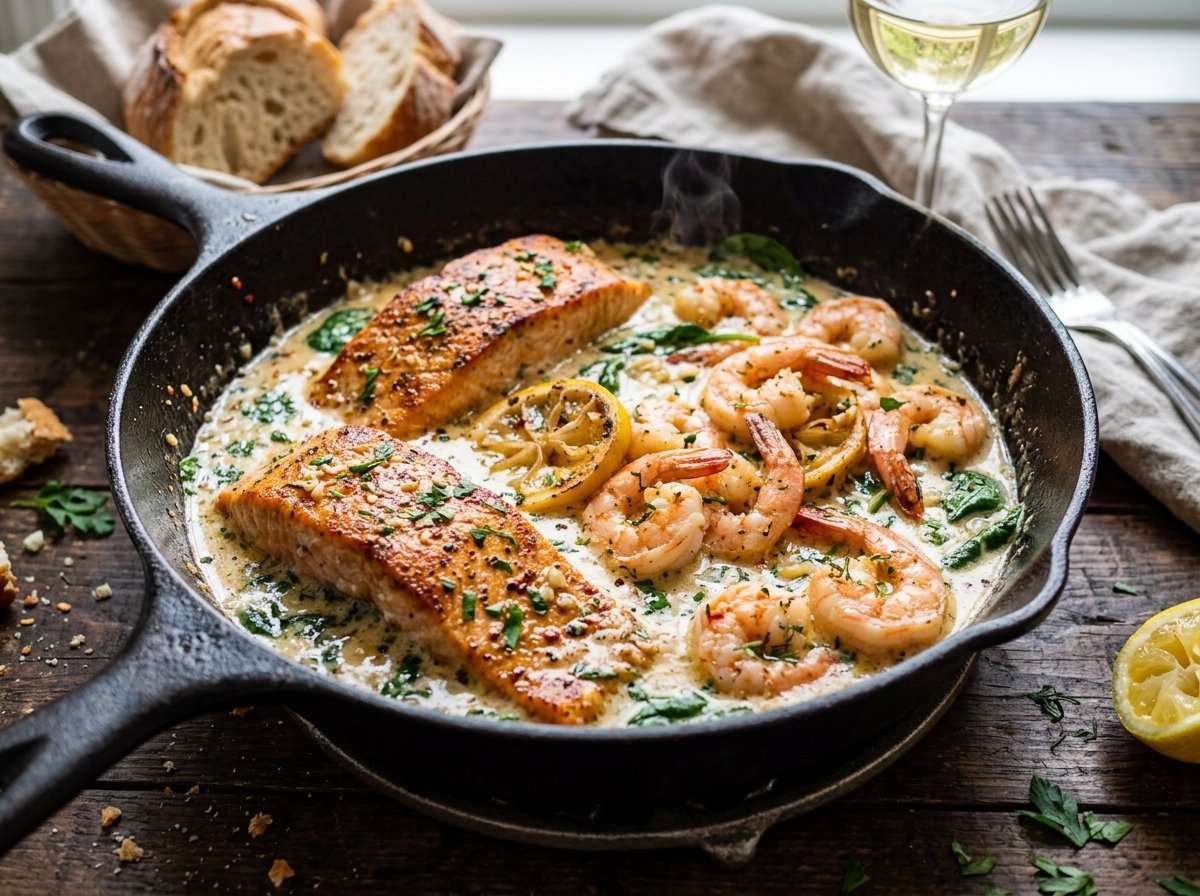
Garlic Butter Salmon and Shrimp Seafood in Cream Sauce is the kind of dinner that looks restaurant-worthy but is surprisingly easy to prepare at home. Tender salmon and juicy shrimp are cooked in a rich garlic butter sauce, then finished with cream, Parmesan and fresh herbs. The sauce becomes silky and flavorful, coating every piece of seafood without overpowering its natural taste.
This recipe is perfect when you want something comforting but still elegant. The combination of salmon, shrimp, garlic, butter and cream creates a rich, savory dish with just enough freshness from lemon and parsley to keep everything balanced. Serve it over pasta, rice, mashed potatoes or simply with crusty bread for soaking up every last drop of sauce.
Why this salmon and shrimp recipe works so well
There is something special about combining salmon with shrimp. Salmon brings a buttery, rich texture, while shrimp cooks quickly and provides a slightly sweet seafood flavor. When both are combined with garlic butter and a creamy sauce, the result is wonderfully satisfying without requiring complicated cooking techniques.
The key is to avoid overcooking the seafood. Salmon should remain tender and moist in the center, while shrimp should become pink, opaque and pleasantly firm. Cooking each seafood separately at first makes it easier to control the texture before bringing everything together in the sauce.
The cream sauce also benefits from gentle cooking. You want it to thicken naturally rather than boil aggressively. A little Parmesan helps give the sauce body, while lemon juice cuts through the richness and keeps the dish from tasting too heavy.
Ingredients for 4 people
For the seafood
- 4 salmon fillets, about 150–180 g each
- 300 g peeled and deveined shrimp
- 3 tablespoons butter
- 1 tablespoon olive oil
- 5 garlic cloves, finely minced
- 1 teaspoon paprika
- Salt
- Black pepper
For the creamy sauce
- 250 ml heavy cream
- 100 ml chicken or seafood stock
- 60 g grated Parmesan
- 1 tablespoon lemon juice
- 1 teaspoon Dijon mustard, optional
- 1 teaspoon Italian seasoning
- A pinch of chili flakes, optional
- 2 tablespoons chopped fresh parsley
You can also add spinach, mushrooms or sun-dried tomatoes if you want to turn the recipe into an even more substantial meal.
Prepare the salmon
Pat the salmon fillets dry with paper towels. Removing excess moisture helps them develop a beautiful golden surface rather than simply steaming in the pan.
Season both sides with salt, black pepper and paprika. You do not need a complicated spice mixture because the garlic butter sauce will provide most of the flavor.
Heat a large skillet over medium-high heat. Add the olive oil and one tablespoon of butter.
Place the salmon skin-side down if your fillets still have the skin attached. Cook for approximately 4 to 5 minutes, depending on thickness. The salmon should develop a golden crust while remaining tender inside.
Carefully turn the fillets and cook for another 2 to 3 minutes. Remove them from the skillet and set aside.
The salmon does not need to be completely finished at this point because it will return to the sauce later.
Cook the shrimp
Add another tablespoon of butter to the same skillet. Once melted, add the shrimp in a single layer.
Cook them for approximately 1 to 2 minutes per side, depending on their size. They should turn pink and opaque and curl slightly.
Do not cook them for too long. Overcooked shrimp can quickly become rubbery, and no amount of creamy sauce can completely rescue that texture.
Remove the shrimp and place them with the salmon.
Keeping the seafood juices in the skillet is important because they will become part of the sauce.
Build the garlic butter base
Reduce the heat to medium. Add the remaining butter to the skillet.
Add the minced garlic and cook for approximately 30 seconds to 1 minute. Stir continuously and avoid allowing the garlic to brown too much. Burnt garlic can become bitter and overpower the delicate seafood.
If you like a little heat, add a pinch of chili flakes at this stage.
The kitchen should already smell wonderfully aromatic. This garlic butter forms the foundation of the entire sauce, so give it a moment to become fragrant without rushing the process.
Make the creamy sauce
Pour the stock into the skillet and scrape the bottom with a wooden spoon or spatula. Those browned bits left behind by the salmon and shrimp are packed with flavor.
Allow the stock to simmer for a couple of minutes. Then pour in the heavy cream and stir gently.
Add the Parmesan, Italian seasoning and Dijon mustard if using. Continue cooking over medium-low heat for approximately 3 to 5 minutes, stirring occasionally.
The sauce should gradually become creamy and slightly thicker. Avoid boiling it aggressively because high heat can cause the cream to separate.
Taste the sauce before adding additional salt. Parmesan, stock and seafood can already provide plenty of seasoning.
Add lemon for balance
Once the sauce has thickened, add the lemon juice.
This small amount of acidity makes a huge difference. Cream and butter are rich ingredients, and lemon provides the bright contrast that keeps the sauce tasting fresh.
You can also add a little lemon zest for an even more pronounced citrus aroma.
If the sauce becomes too thick, add a splash of stock or cream. If it seems too thin, let it simmer gently for another minute or two.
Return the salmon and shrimp
Place the salmon fillets back into the skillet. Spoon the creamy garlic butter sauce over them.
Add the shrimp around the salmon and allow everything to warm together for approximately 2 to 3 minutes.
Do not stir aggressively. Salmon is delicate, especially after cooking, and you want the fillets to remain intact.
Finish with freshly chopped parsley and a few extra cracks of black pepper.
At this point, the sauce should be thick enough to coat the back of a spoon while remaining fluid enough to spread over the salmon and shrimp.
How to get a silky cream sauce
The texture of the sauce depends on temperature and timing. Keep the heat moderate once the cream is added. A gentle simmer gives the liquid time to reduce without causing the dairy to separate.
Parmesan is particularly useful because it adds both flavor and body. Add it gradually and stir until fully incorporated.
If your sauce becomes too thick, don’t worry. A few tablespoons of warm stock can loosen it immediately. If it remains too thin, simply continue simmering uncovered for another couple of minutes.
The goal is a sauce that is creamy and glossy rather than heavy and pasty.
What to serve with garlic butter salmon and shrimp
This dish is incredibly versatile. One of the best options is pasta because the noodles capture the creamy garlic sauce beautifully.
Long pasta such as linguine or fettuccine works especially well. Cook the pasta separately, then toss it with some of the sauce before placing the salmon and shrimp on top.
Rice is another excellent option. White rice, basmati rice or jasmine rice provides a neutral base that allows the seafood sauce to shine.
For a lighter meal, serve the seafood with steamed asparagus, broccoli or green beans. A simple green salad with lemon vinaigrette can also balance the richness.
And if you love bread, do not underestimate a piece of crusty baguette. The sauce is simply too good to leave behind.
Add vegetables for a complete skillet meal
You can easily turn this recipe into a one-pan dinner by adding vegetables.
Spinach is one of the easiest choices. Add a couple of handfuls once the cream has been incorporated and allow it to wilt gently.
Mushrooms are another excellent option. Sauté sliced mushrooms after removing the seafood and before making the sauce. Their earthy flavor pairs beautifully with garlic butter and Parmesan.
Sun-dried tomatoes can provide a sweet and slightly tangy contrast. For something fresher, add halved cherry tomatoes toward the end of cooking.
Can frozen shrimp be used?
Yes. Frozen shrimp can work very well in this recipe.
The most important step is to thaw them completely and pat them dry before cooking. Excess water can prevent them from browning and can dilute the sauce.
If you are using pre-cooked shrimp, add them only near the end. They require just enough time to heat through. Cooking them from the beginning will almost certainly make them tough.
For the best texture, raw peeled shrimp are preferable.
Can you prepare this recipe ahead of time?
This dish is best served immediately because seafood has its best texture when freshly cooked. However, you can prepare some components in advance.
The garlic, seasoning and sauce base can be prepared ahead of time. You can also clean and season the seafood before cooking.
If you have leftovers, refrigerate them in an airtight container and consume them within 1 to 2 days. Reheat gently over low heat with a small splash of cream or stock.
Avoid bringing the sauce to a vigorous boil during reheating. Gentle heat will help prevent the seafood from becoming overcooked.
Variations to try
There are countless ways to customize this creamy seafood skillet. For a spicy version, increase the chili flakes or add a little cayenne pepper.
For a Mediterranean twist, add cherry tomatoes, spinach, oregano and extra lemon. A handful of fresh basil can also work beautifully.
If you prefer a lighter sauce, replace part of the heavy cream with milk or additional seafood stock. The final sauce will be less rich but still flavorful.
You can also replace Parmesan with another hard cheese, although Parmesan gives the most traditional savory depth.
Conclusion
Garlic Butter Salmon and Shrimp Seafood in Cream Sauce is a rich, comforting recipe that brings together tender salmon, juicy shrimp and an irresistibly silky garlic butter sauce. The dish may look sophisticated, but the preparation is straightforward: sear the seafood, build the sauce in the same skillet and gently bring everything together.
The most important details are simple—do not overcook the shrimp, keep the cream sauce at a gentle simmer and finish with lemon to balance the richness. Serve it over pasta or rice, or pair it with vegetables and crusty bread for a complete meal. Once you try this combination, it is easy to see why salmon, shrimp and garlic butter cream sauce make such a fantastic dinner.
FAQ
Can I use salmon and shrimp together in the same pan?
Yes. It is best to sear them separately first so you can control their cooking times. They can then be returned to the creamy sauce together for the final few minutes.
Can I use frozen salmon?
Yes, but thaw it completely in the refrigerator before cooking. Pat it dry thoroughly so it browns properly in the skillet.
How do I prevent the shrimp from becoming rubbery?
Avoid overcooking them. Most medium or large shrimp need only about 1–2 minutes per side. Remove them from the pan as soon as they become pink and opaque.
Can I make the sauce without Parmesan?
Yes. Parmesan adds savory flavor and helps thicken the sauce, but you can omit it and allow the cream and stock to reduce slightly longer.
What pasta works best with this recipe?
Linguine, fettuccine and spaghetti are excellent choices because their shape allows the creamy garlic sauce to cling to the pasta.