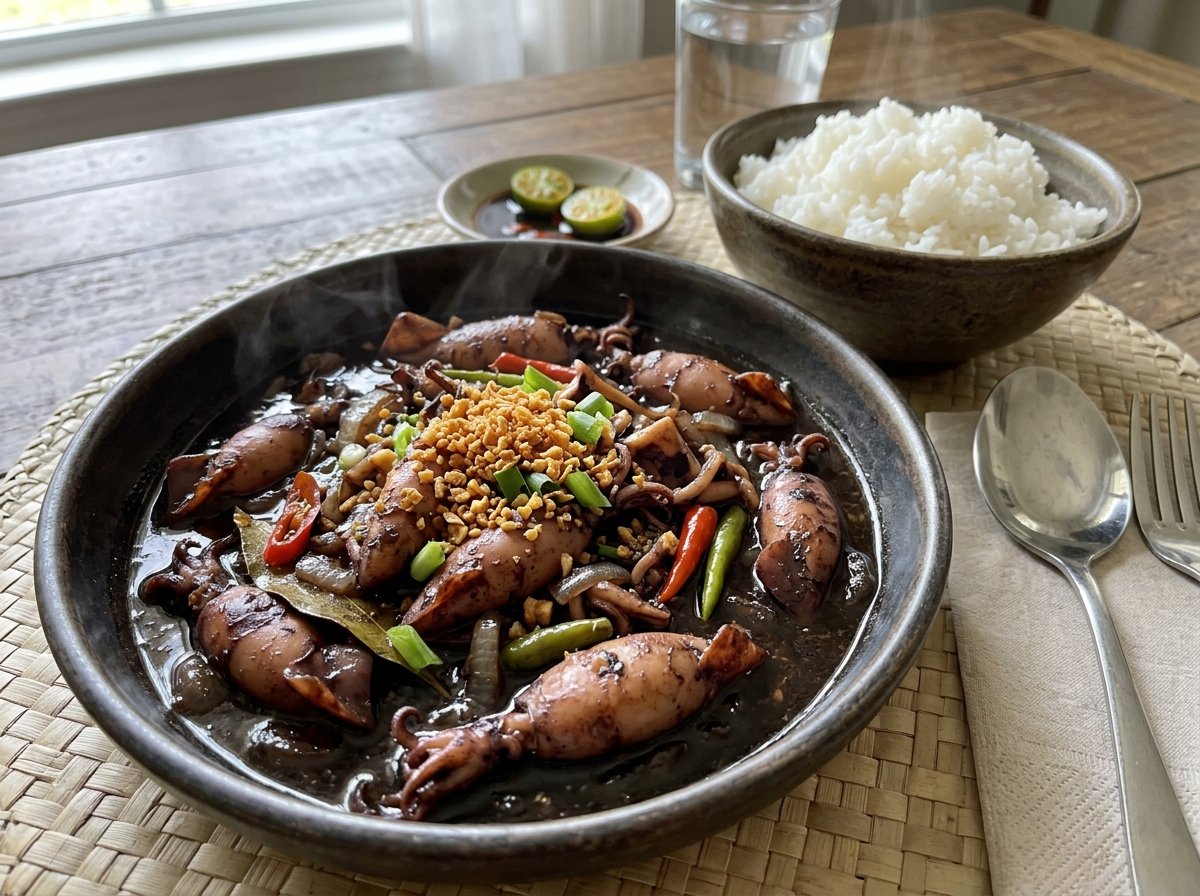
Adobong Pusit: Filipino Squid Adobo Recipe
Adobong pusit is one of those Filipino dishes that proves a handful of simple ingredients can create an incredibly memorable meal. Tender squid is simmered with garlic, vinegar, soy sauce, onions, and aromatics until it takes on that unmistakable sweet-salty-sour character associated with Filipino adobo. The finished dish is savory, slightly tangy, deeply aromatic, and perfect when spooned over a mountain of freshly steamed white rice.
What makes this recipe particularly appealing is how quickly it comes together. Unlike meat-based adobo, which can benefit from a long simmer, squid cooks much faster. That means you can have a flavorful Filipino dinner on the table without spending hours beside the stove. The real trick is understanding the squid itself: cook it too briefly and it may remain tough, but cook it endlessly and it can turn rubbery. Get that timing right, and the texture becomes pleasantly firm and tender.
This version stays close to the classic spirit of Filipino adobong pusit, while giving you practical techniques that make the dish easier to prepare at home. Whether you are cooking Filipino food for the first time or grew up eating seafood adobo, this recipe gives you a reliable starting point. Grab some fresh squid, plenty of garlic, and your favorite rice, and let’s get cooking.
What Makes Adobong Pusit So Special?
Adobong pusit stands apart from many seafood dishes because it does not try to hide the natural character of the squid. Instead, the cooking method builds around it. The squid brings a mild oceanic sweetness, while vinegar adds brightness, soy sauce supplies salt and umami, and garlic provides the deep aromatic backbone that makes Filipino adobo so recognizable. When those flavors meet in the pan, the result is remarkably satisfying despite the short ingredient list.
Another distinctive feature is the squid’s natural ink. Depending on the preparation, squid ink can be retained and incorporated into the sauce, giving traditional versions of adobong pusit a dark, dramatic appearance and a deeper seafood flavor. You can certainly make the dish without the ink, but keeping it is worth considering if you enjoy a stronger, more authentic squid-forward taste.
There is also something wonderfully practical about this dish. Filipino home cooking often excels at transforming everyday ingredients into food that feels complete and comforting. Adobong pusit fits that tradition perfectly. You don’t need a complicated spice blend, an expensive sauce, or a long list of specialty ingredients. Instead, you build flavor through contrast: salty against sour, savory against sweet, tender squid against fluffy rice.
That balance is the reason this dish can become an instant weeknight favorite. It is bold enough to feel special but uncomplicated enough to make when you don’t want a kitchen marathon.
The Flavor Balance of Vinegar, Soy Sauce, and Garlic
The heart of adobong pusit is the relationship between vinegar, soy sauce, and garlic. Each ingredient has a distinct job, and changing the balance can dramatically alter the final dish. Vinegar provides acidity that cuts through the richness of the squid, while soy sauce contributes saltiness and umami. Garlic ties everything together with its warm, slightly sweet aroma.
One important technique when cooking adobo is allowing the vinegar to cook properly rather than immediately stirring everything together. When vinegar first hits a hot pan, its aroma can be sharp and aggressive. Letting it simmer for a little while softens that raw acidic edge and gives the sauce a rounder flavor. You don’t want the finished dish to taste like straight vinegar; you want the acidity to act like a bright line running through the savory sauce.
Garlic deserves generous treatment here. If you love garlic, don’t be shy. Several cloves can be sliced, chopped, or lightly crushed depending on the texture you prefer. Some cooks like to fry garlic until lightly golden before adding other ingredients, creating nutty notes that become woven into the sauce.
The beauty of this balance is that you can adjust it to your own palate. Prefer more tang? Add a small splash of vinegar near the end. Want a richer savory profile? Increase the soy sauce slightly. Like your adobo mellow and rounded? A tiny amount of sugar can soften the sharpness without making the dish sweet.
Why Squid Needs a Different Cooking Approach
Squid is not difficult to cook, but it is famously unforgiving if you don’t pay attention to timing. This is why a squid recipe can sometimes go from beautifully tender to disappointingly chewy without much warning. The key is understanding that squid generally has two useful cooking windows: very quick cooking or longer cooking. The awkward middle ground is where rubbery texture often appears.
For adobong pusit, many home cooks favor quick cooking because it preserves the squid’s delicate texture and allows the sauce to remain fresh and lively. Squid generally needs only a few minutes to cook through, depending on the size of the pieces and the heat of the pan. Once it becomes opaque and firm, you should start paying close attention.
The other factor is moisture. Squid releases liquid as it cooks, and that liquid contains plenty of flavor. Rather than immediately throwing everything into a heavily seasoned sauce, you can let the squid release some of its natural juices and allow the sauce to reduce afterward. This concentrates the flavors without requiring excessive seasoning.
Think of squid like a delicate piece of fruit compared with a tough cut of meat. You don’t want to bully it with unnecessary cooking. Give it the right amount of heat, let the aromatics do their work, and stop when the texture is ready.
Ingredients You’ll Need
A good adobong pusit recipe doesn’t require an enormous shopping list. The basic ingredients are squid, vinegar, soy sauce, garlic, onion, and a few seasonings. Fresh chili can be added for heat, while bay leaves and black pepper provide additional aromatic depth.
For approximately four servings, gather:
- 1½ to 2 pounds fresh squid, cleaned
- 5 to 6 cloves garlic, minced or sliced
- 1 medium onion, sliced
- ½ cup Filipino-style or regular soy sauce
- ¼ to ⅓ cup cane vinegar or white vinegar
- ½ cup water, as needed
- 2 bay leaves
- ½ teaspoon freshly ground black pepper
- 1 teaspoon sugar, optional
- 1 to 2 fresh chilies, sliced, optional
- 1 tablespoon cooking oil
- Salt, only if needed
- Steamed white rice, for serving
These quantities are a starting point rather than a rigid formula. Squid varies in size, soy sauce varies in saltiness, and vinegar varies in sharpness. Taste as you go and adjust carefully.
If you have access to Filipino cane vinegar, it is an excellent choice. Its flavor works beautifully with adobo, although ordinary white vinegar can still produce a delicious result. Apple cider vinegar can also work in a pinch, but it introduces a fruitier character that changes the traditional profile.
Choosing and Preparing Fresh Squid
When shopping for squid, freshness makes a noticeable difference. Look for squid with a clean, mild ocean smell rather than an intensely fishy odor. The flesh should look firm and moist, and the skin should appear glossy rather than dried out. If you are buying whole squid, the body should feel resilient when gently pressed.
Small to medium squid are especially nice for adobong pusit because they cook quickly and remain tender. Larger squid can work too, but they may need to be cut into rings or smaller pieces so they cook evenly.
Cleaning squid can look intimidating the first time, but once you understand the anatomy, it becomes straightforward. Pull the head and tentacles gently away from the body. Remove the internal contents and the transparent cartilage-like quill from inside the tube. Rinse the body carefully under cold water.
The tentacles are edible and flavorful. Trim away the hard beak from the center and discard it. You can leave the tentacles whole or cut them into smaller pieces.
If the squid contains an intact ink sac and you want to use the ink, handle it gently because it can burst easily. Squid ink can deepen both the color and flavor of the finished adobo. If you prefer a lighter-looking sauce, simply omit it.
The Best Aromatics and Seasonings
Garlic is the undisputed star of the aromatic base, but onion helps provide sweetness and body. Bay leaves contribute a subtle herbal note, while black pepper gives the sauce a gentle warmth.
Fresh chili is optional, but it can add a wonderful kick. Thai chilies, finger chilies, or another fresh hot pepper can work depending on what you have available. If you are cooking for children or guests who don’t enjoy spicy food, leave the chili out and serve sliced peppers separately.
Sugar is another optional ingredient. Traditional adobo recipes vary considerably from household to household, and some cooks prefer a slightly sweeter sauce. A teaspoon is usually enough to round out the acidity without turning the dish into a sweet glaze.
The goal isn’t to throw every possible seasoning into the pot. Good adobo is about balance, not complexity. Start with the essentials and adjust after tasting.
How to Prepare Adobong Pusit
Once your squid is cleaned and your ingredients are ready, the cooking process is remarkably manageable. The entire dish can often be prepared in well under 30 minutes, making it ideal for a busy evening when you want something more exciting than another ordinary stir-fry.
The most important thing is to have everything ready before the squid hits the pan. Squid cooks quickly, so this is not the kind of recipe where you want to start chopping garlic halfway through cooking.
Clean and Cut the Squid Properly
Pat the cleaned squid dry with paper towels. Excess water can cause the squid to steam rather than sear, and it can also dilute the sauce.
Leave smaller squid whole if you like a rustic presentation, or slice the bodies into rings approximately half an inch thick. Larger squid should generally be cut into manageable pieces. Keep the tentacles attached or separate them into clusters.
If you’re using the ink, carefully reserve it. Otherwise, discard the ink sacs and rinse the squid thoroughly.
Season the squid very lightly with black pepper. Avoid adding lots of salt at this stage because soy sauce will provide substantial saltiness later.
Having the squid reasonably dry is one of those small details that makes a surprisingly large difference. A hot pan and dry squid encourage better browning and help the final sauce cling to the seafood.
Build the Adobo Sauce
Heat a large skillet or sauté pan over medium-high heat and add the oil. Add the garlic and onion, then cook until fragrant and softened. You want the garlic aromatic and lightly golden, not dark brown and bitter.
Add the vinegar and allow it to bubble for a minute or two without aggressively stirring. This helps mellow the raw sharpness of the vinegar. Next, add the soy sauce, water, bay leaves, black pepper, and optional sugar.
Bring the mixture to a gentle simmer. Taste the sauce carefully. It should be distinctly savory and tangy, but neither the soy sauce nor vinegar should completely overpower the other.
If you are using squid ink, stir it into the sauce at this stage. The liquid will become much darker, and the seafood flavor will become more pronounced.
Cook the Squid Until Tender
Add the squid to the simmering sauce and cook until the pieces become opaque and firm. Depending on their size and the heat of your pan, this can take only a few minutes.
Avoid walking away from the stove. Squid doesn’t need babysitting for an hour, but it does reward attention for the few minutes when it matters most.
As the squid cooks, it will release additional liquid. Allow the sauce to bubble gently so it can reduce and concentrate. If the pan seems too dry, add a small splash of water. If the sauce seems too thin, let it reduce uncovered for another minute or two.
Taste before serving. If it needs more acidity, add a tiny splash of vinegar. If it is too sharp, a pinch of sugar can help. If the flavor seems flat, a little additional soy sauce may bring everything into focus.
The final sauce should be flavorful enough to soak into rice but not so salty that you need to use it sparingly.
Tips for Tender, Flavorful Squid
The best adobong pusit comes down to a few practical decisions rather than complicated technique. First, start with good squid. No amount of sauce can completely compensate for seafood that has lost its freshness.
Second, don’t overload the pan. If you have a large quantity of squid, cooking it in batches can help maintain enough heat to cook it efficiently. Crowding the pan causes the squid to release too much liquid at once, which can turn the process into steaming.
Third, keep an eye on the clock. Squid changes texture quickly. At first, the pieces can look translucent and soft. Then they turn opaque and firm. That is the moment to start thinking about stopping the cooking process.
Finally, remember that the sauce is part of the dish, not just decoration. You want enough sauce to spoon generously over rice. The ideal adobo feels integrated: squid, garlic, vinegar, soy sauce, and rice should taste like one complete bite.
How to Avoid Rubbery Squid
Rubbery squid usually comes down to overcooking or poor heat control. If squid sits simmering in liquid for too long, its texture can become increasingly chewy. This is especially noticeable when the pieces are small.
Use medium-high heat initially and cook the squid efficiently. If you’re making a large batch, work in stages rather than filling a tiny pan with a mountain of seafood.
Another useful trick is to avoid cutting the squid into paper-thin pieces. Medium-thick rings or larger pieces are easier to monitor and retain a pleasant texture.
You should also avoid repeatedly stirring the squid. Gentle movement is enough. Constant stirring can break delicate pieces and make it harder to judge how far they have cooked.
When you remove the pan from the heat, remember that residual heat continues cooking the squid. If it looks perfectly done in the pan, it may be slightly more cooked by the time you serve it.
The Two Cooking Windows to Remember
If you remember only one technical principle from this recipe, remember this: squid generally behaves best when cooked very quickly or for a substantially longer period, rather than hovering in the middle.
For adobong pusit, the quick approach is usually the easiest. Cook the squid just until it turns opaque and tender, then stop. A longer braising method can work for some squid preparations, but it changes the texture and requires a different cooking strategy.
This is similar to cooking a delicate steak versus a tough stew cut. You wouldn’t treat both ingredients the same way because their structures respond differently to heat. Squid has its own rules, and once you understand them, the dish becomes much less intimidating.
Adobong Pusit Variations to Try
One of the joys of Filipino home cooking is that recipes often evolve from one kitchen to another. Your family’s adobong pusit may not taste exactly like someone else’s, and that’s part of the charm.
For a spicy adobong pusit, add sliced fresh chilies with the garlic and onion. You can also add a small amount of chili flakes if fresh peppers aren’t available. The heat works beautifully against the acidity of the vinegar.
For a richer version, allow the sauce to reduce slightly longer after cooking the squid. A concentrated sauce clings beautifully to the seafood and creates more intense bites when mixed with rice.
You can also incorporate tomatoes for a slightly sweeter and more rounded version. Tomatoes aren’t essential to classic adobo, but their acidity and natural sweetness can complement squid remarkably well.
Another option is to add extra garlic at the end. Lightly fried garlic sprinkled over the finished dish adds crunch and an intense roasted aroma. It is especially good when the adobo sauce itself is relatively simple.
If you enjoy experimenting, try serving the squid with a small spoonful of crispy fried onions or fresh scallions. These additions aren’t necessary, but they can create contrasting textures that make the meal feel more elaborate.
What to Serve With Squid Adobo
The obvious partner for adobong pusit is steamed white rice, and there is a good reason this combination works so well. Rice acts almost like a sponge, absorbing the salty, tangy sauce and softening its intensity. A spoonful of rice with squid and sauce gives you a much more balanced bite than eating the seafood alone.
Garlic rice is another excellent option. The extra toasted garlic reinforces the aromatic character of the adobo, although you may want to reduce the garlic in the main dish slightly if you prefer a more balanced meal.
For vegetables, keep things simple. Steamed bok choy, sautéed green beans, cucumber salad, or lightly dressed leafy greens can provide freshness and contrast. You don’t need another intensely seasoned side dish because the adobo already brings plenty of flavor.
A simple Filipino-style dipping condiment can also be served at the table. Some people enjoy additional vinegar with chopped chili and garlic, especially if they like sharp, bright flavors.
The best side dish is ultimately the one that lets the adobong pusit remain the star. Think of rice as the foundation and vegetables as the refreshing counterpoint.
How to Store and Reheat Leftovers
If you have leftover adobong pusit, transfer it to an airtight container and refrigerate it promptly. Properly refrigerated leftovers are generally best enjoyed within a couple of days for quality, especially because seafood is more perishable than many meat-based dishes.
When reheating, use gentle heat rather than boiling the squid aggressively. A skillet over low to medium heat works well. Add a tablespoon or two of water if the sauce has thickened considerably, then warm just until everything is heated through.
Microwaving is possible, but short heating intervals are preferable. Heat for a brief period, stir, and check the temperature before continuing. The goal is to warm the squid rather than cook it all over again.
For meal preparation, you can make the sauce base ahead of time and cook the squid closer to serving. This gives you better control over texture and helps prevent the seafood from spending too much time in the hot sauce.
Leftover adobong pusit can also become a surprisingly good next-day lunch. Chop larger pieces and serve them over hot rice with a fried egg and a few slices of cucumber. The sauce soaks into the rice, while the fresh vegetables add a welcome contrast.
Conclusion
Adobong pusit is a brilliant example of why Filipino cuisine can be so satisfying without relying on complicated techniques. Squid, garlic, vinegar, soy sauce, onion, and a few simple aromatics come together to create a dish that is bold, tangy, savory, and deeply comforting. The real secret isn’t an obscure ingredient; it is respecting the squid and cooking it at the right moment.
If you’re making this recipe for the first time, focus on three things: use fresh squid, balance the vinegar and soy sauce, and avoid overcooking the seafood. Once those pieces are under control, the rest is remarkably forgiving. You can make it spicier, sweeter, darker with squid ink, or more garlicky depending on your taste.
Serve it with steaming hot rice, spoon plenty of the sauce over the top, and don’t be surprised if everyone reaches for seconds. Sometimes the simplest meals are the ones that become regulars at the dinner table, and adobong pusit has all the qualities of one of those dishes.
Frequently Asked Questions About Adobong Pusit
1. What does adobong pusit taste like?
Adobong pusit has a distinctive combination of salty, sour, savory, garlicky, and mildly sweet flavors. The vinegar provides brightness while soy sauce delivers umami and saltiness. Squid adds a naturally sweet seafood flavor, and squid ink can make the dish darker and more intensely oceanic. Served with rice, the flavors become beautifully balanced.
2. Should I remove the squid ink when making adobong pusit?
You can do either. Removing the ink creates a lighter-colored adobo with a cleaner appearance, while keeping it gives the sauce a dark color and a stronger seafood character. If you have fresh squid with intact ink sacs, you can carefully reserve the ink and incorporate it into the sauce. Handle the sacs gently because they can burst easily.
3. How do I stop squid from becoming rubbery?
The most important step is controlling cooking time. Squid generally benefits from very quick cooking or a much longer cooking method, while prolonged cooking over moderate heat can produce a chewy texture. For adobong pusit, the quick method is usually easiest. Cook the squid until opaque and just tender, then remove it from the heat.
4. Can I use frozen squid for this recipe?
Yes, frozen squid can work very well. Thaw it completely in the refrigerator before cooking and drain away excess liquid. Pat the squid dry before placing it in the pan. Fresh squid may have a slightly more delicate texture, but properly thawed frozen squid can still produce an excellent adobong pusit.
5. Can I make adobong pusit without soy sauce?
Yes, although the result will no longer have the classic soy-based adobo flavor. You can experiment with salt, fish sauce, or other savory seasonings depending on your preferences. If using fish sauce, start with a small amount because its flavor can be quite concentrated. The key is maintaining the characteristic balance between savory seasoning and vinegar.