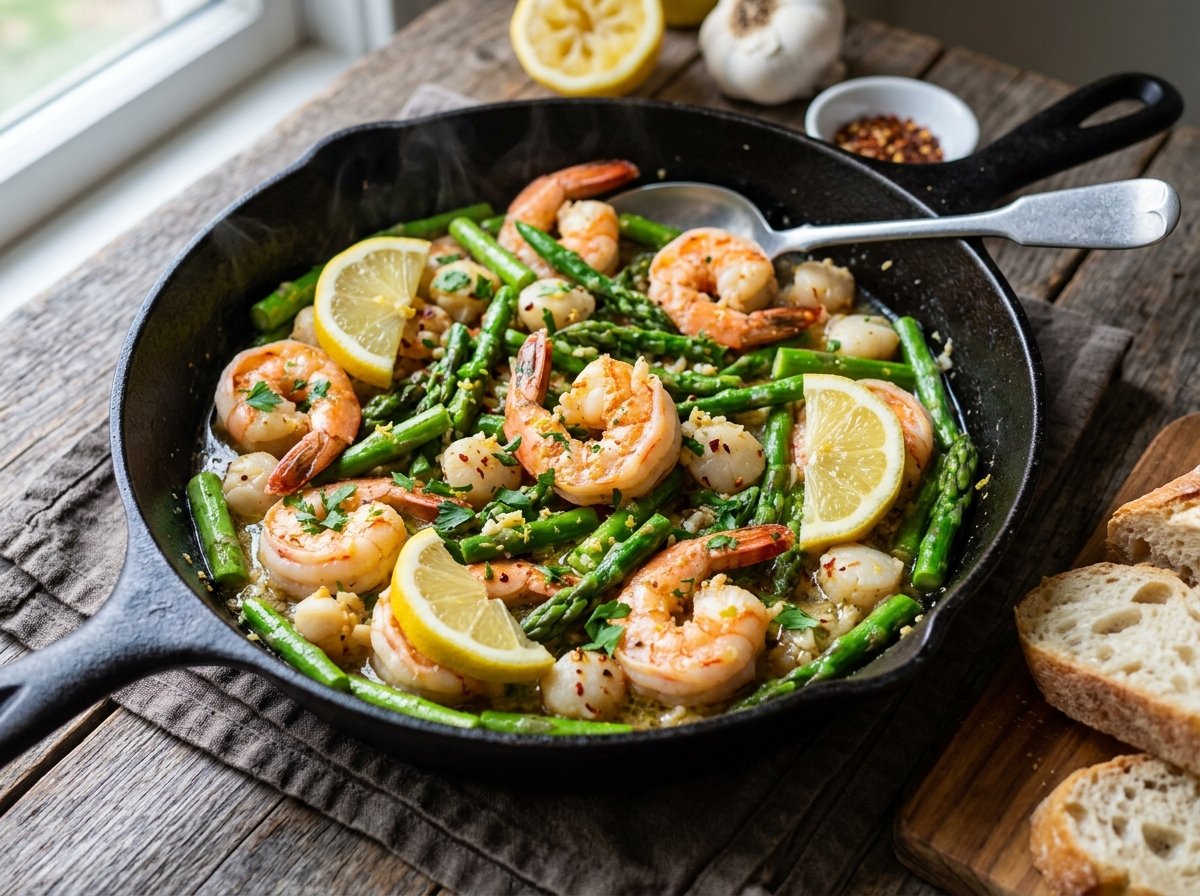
Lemony Garlic Shrimp Seafood Asparagus Skillet Recipe
When dinner needs to be quick but you still want something that tastes fresh and special, this lemony garlic shrimp seafood asparagus skillet is the kind of recipe worth keeping close. Tender shrimp, crisp-tender asparagus, plenty of fragrant garlic, butter, olive oil, and bright lemon come together in one pan for a meal that feels much more impressive than the effort required. The flavors are clean and lively rather than heavy, so every bite has that delicious combination of savory garlic, buttery seafood, fresh vegetables, and a little citrusy zing. Best of all, the entire dish comes together in roughly 25 minutes, making it a practical choice for a busy weeknight.
The beauty of a skillet recipe is that you do not need a complicated cooking routine. Instead of preparing several separate dishes, you build the meal in layers in one pan. The asparagus gets a quick sauté first, followed by the shrimp, and then everything is brought together with a simple lemon-garlic sauce. That sequence matters because shrimp cook quickly, while asparagus needs just enough heat to become tender without turning soft and lifeless. The result is a colorful, satisfying seafood dinner with plenty of flavor and very little cleanup.
Why You’ll Love This Lemony Garlic Shrimp Skillet
There is something particularly appealing about recipes that balance richness with freshness, and this one does exactly that. Garlic and butter give the shrimp a comforting savory foundation, while lemon cuts through that richness and keeps the finished dish bright. Asparagus adds a slightly earthy, grassy flavor and a pleasant crunch, giving the skillet more texture than seafood alone. A sprinkle of fresh parsley at the end adds another layer of freshness and makes the finished dish look restaurant-worthy.
Another advantage is flexibility. You can serve the skillet exactly as it is for a lighter, low-carb meal, or spoon it over rice, pasta, couscous, quinoa, or crusty bread if you want something more substantial. You can also adjust the seasoning to suit your taste. A pinch of red pepper flakes adds heat, extra lemon makes the dish sharper, and a little grated Parmesan can create a richer variation. Think of the recipe as a simple foundation rather than a rigid set of rules.
Fresh, Bright, and Ready Fast
The secret to making this meal taste fresh is avoiding overcooking. Shrimp do not need much time in a hot skillet, and asparagus should retain some bite. When shrimp turn opaque and form a gentle C shape, they are generally ready. If they curl tightly into an O shape, they may have spent too long over the heat and can become rubbery.
The lemon should also be added thoughtfully. Fresh lemon juice provides the acidity that ties everything together, while a little zest gives the dish an intense citrus aroma without requiring much extra juice. Adding some lemon toward the end preserves that bright flavor instead of allowing it to disappear during prolonged cooking. This small detail can make the difference between a good skillet dinner and one that tastes remarkably fresh.
Ingredients You’ll Need
For approximately 4 servings, gather:
- 1½ pounds large shrimp, peeled and deveined
- 1 pound fresh asparagus, trimmed and cut into bite-sized pieces
- 3 tablespoons olive oil, divided
- 3 tablespoons unsalted butter
- 5–6 garlic cloves, finely minced
- 1 large lemon, zested and juiced
- ½ teaspoon salt, or to taste
- ½ teaspoon freshly ground black pepper
- ½ teaspoon paprika
- ¼ teaspoon red pepper flakes, optional
- 2 tablespoons chopped fresh parsley
- 2–3 tablespoons chicken or seafood stock, optional
- Lemon wedges, for serving
The ingredient list is intentionally simple. Large shrimp are ideal because they remain juicy and meaty while you cook the vegetables. Fresh asparagus works best when the stalks are firm and brightly colored. You can use thin or medium asparagus; if the stalks are particularly thick, cut them into smaller pieces so they cook at roughly the same pace as the shrimp.
Choosing the Best Shrimp and Asparagus
For shrimp, either fresh or properly thawed frozen shrimp can work beautifully. Look for shrimp that smell clean and mildly briny rather than strongly fishy. If you are buying frozen shrimp, thaw them completely and pat them very dry before they hit the skillet. Excess moisture can cause steaming instead of the quick searing you want.
When choosing asparagus, look for firm stalks with compact tips. Avoid bunches that appear limp, excessively dry, or discolored. The bottom ends can be woody, so snap or trim away the tough portion before cutting the stalks. You do not need to peel ordinary asparagus for this recipe.
How to Make Lemony Garlic Shrimp Seafood Asparagus Skillet
Prepare the Shrimp and Vegetables
Start by patting the shrimp dry with paper towels. This step is easy to skip, but it helps the shrimp develop better color and prevents excess water from accumulating in the pan. Season the shrimp with salt, black pepper, and paprika. If you enjoy spicy food, add the red pepper flakes now or save them for the sauce.
Trim the asparagus and cut it into pieces about 1½ inches long. Heat a large skillet over medium-high heat and add about 1 tablespoon of olive oil. Once the oil is hot, add the asparagus in a relatively even layer. Cook for approximately 4–5 minutes, stirring occasionally, until the asparagus becomes bright green and tender-crisp. Transfer it to a plate temporarily.
This quick vegetable-first approach gives the asparagus a chance to develop some roasted flavor without becoming mushy. If your skillet is small, work in batches rather than crowding everything together. A crowded pan traps moisture, and that can interfere with browning.
Build the Garlic Lemon Sauce
Reduce the heat to medium and add the remaining olive oil and butter to the skillet. Once the butter melts and begins to foam, add the minced garlic. Cook for about 30–60 seconds, stirring constantly. You want the garlic to become fragrant and lightly golden, not dark brown. Burned garlic can introduce a bitter flavor that overwhelms the delicate shrimp.
Add the seasoned shrimp and cook for approximately 1½–2 minutes per side, depending on their size. The shrimp should become opaque and pink with a firm but tender texture. Add the lemon zest and lemon juice, followed by a splash of seafood or chicken stock if you want a little extra sauce.
The combination of butter, garlic, lemon, and the natural juices released by the shrimp creates a remarkably flavorful pan sauce. Scrape the bottom of the skillet gently with a wooden spoon to incorporate any browned bits left behind. Those little caramelized pieces are concentrated flavor, so you do not want them going to waste.
Finish the Seafood Skillet
Return the cooked asparagus to the skillet and gently toss everything together. Let it cook for another 1–2 minutes, just long enough for the vegetables to warm through and absorb some of the lemon-garlic sauce.
Taste the skillet and adjust the seasoning. You might want another squeeze of lemon, a little more black pepper, or a pinch of salt. Remove the pan from the heat and scatter fresh parsley over the top.
Serve immediately with lemon wedges on the side. The finished skillet should have juicy shrimp, vibrant asparagus, a buttery sauce, and enough lemon to make the entire dish taste lively rather than heavy.
Helpful Cooking Tips and Variations
One of the easiest ways to improve this recipe is to pay attention to pan temperature. You want the skillet hot enough to cook the shrimp quickly but not so hot that the garlic burns before the seafood is ready. If the garlic starts browning aggressively, reduce the heat immediately.
You can also customize the seafood. Scallops, chunks of firm white fish, or cooked lump crab can work in variations of this recipe, although each requires different cooking times. If using scallops, sear them separately so they develop a golden crust. For a more substantial seafood skillet, you could combine shrimp with scallops and a small amount of calamari, but avoid overcrowding the pan.
For additional flavor, try adding cherry tomatoes, spinach, mushrooms, or thinly sliced bell peppers. A splash of dry white wine can replace some of the stock and add acidity and depth. If you prefer a creamy sauce, stir in a small amount of heavy cream after the shrimp are cooked, but keep the quantity modest so the lemon flavor remains noticeable.
How to Keep Shrimp Juicy
The most important rule is simple: do not overcook the shrimp. Shrimp can go from perfectly tender to rubbery surprisingly quickly. Because their cooking time varies according to size, use visual cues rather than relying only on the clock.
Start with dry shrimp, cook them in a properly heated skillet, and remove the pan from the heat as soon as they are opaque and cooked through. Remember that residual heat continues cooking food after you turn off the burner. If your shrimp are particularly small, reduce the cooking time accordingly.
What to Serve With Garlic Shrimp and Asparagus
This skillet can stand alone, but it also pairs beautifully with a range of sides. For a light meal, serve it with a simple green salad dressed with lemon vinaigrette. For a heartier dinner, spoon the shrimp and asparagus over steamed rice or fluffy quinoa so the grains can soak up the buttery lemon sauce.
Crusty bread is another excellent choice. It may be one of the simplest pairings, but dipping warm bread into the remaining garlic-lemon sauce is hard to beat. Pasta also works particularly well; toss cooked linguine or angel hair with the shrimp, asparagus, and a little pasta water to turn the skillet into a quick lemon-garlic seafood pasta.
Storage and Reheating
Store leftovers in an airtight container in the refrigerator for up to 2–3 days. Because shrimp are sensitive to prolonged reheating, warm them gently rather than blasting them at high heat. A skillet over low to medium heat with a small splash of water or stock is usually better than extended microwave heating.
If you know you will have leftovers, slightly undercook the shrimp the first time. They can finish cooking during reheating without becoming excessively firm. The asparagus may soften somewhat after refrigeration, but the lemon-garlic flavors often become even more integrated.
Nutrition and Portion Notes
This recipe is naturally rich in protein thanks to the shrimp and provides vegetables from the asparagus. The primary sources of added fat are olive oil and butter, so the nutritional profile can be adjusted by changing those quantities. Serving the skillet without rice, pasta, or bread creates a relatively light meal, while adding a grain or pasta increases carbohydrates and overall calories.
Exact nutrition will depend on the size of the shrimp, the amount of butter and oil used, and your chosen serving size. If nutritional tracking matters to you, calculate the values using the specific brands and quantities of ingredients you actually use.
Lemony Garlic Shrimp Seafood Asparagus Skillet Recipe Card
Prep time: 10 minutes
Cook time: 15 minutes
Total time: 25 minutes
Servings: 4
Ingredients
- 1½ pounds large shrimp, peeled and deveined
- 1 pound asparagus, trimmed and chopped
- 3 tablespoons olive oil
- 3 tablespoons unsalted butter
- 5–6 garlic cloves, minced
- Zest and juice of 1 lemon
- ½ teaspoon salt
- ½ teaspoon black pepper
- ½ teaspoon paprika
- ¼ teaspoon red pepper flakes, optional
- 2 tablespoons fresh parsley, chopped
- 2–3 tablespoons seafood or chicken stock, optional
Instructions
- Pat the shrimp dry and season with salt, pepper, paprika, and optional red pepper flakes.
- Heat 1 tablespoon olive oil in a large skillet over medium-high heat.
- Add asparagus and cook for 4–5 minutes until bright green and tender-crisp. Transfer to a plate.
- Add remaining olive oil and butter to the skillet.
- Add garlic and cook for 30–60 seconds until fragrant.
- Add shrimp and cook for approximately 1½–2 minutes per side, until opaque and cooked through.
- Add lemon zest, lemon juice, and optional stock.
- Return asparagus to the skillet and toss gently for 1–2 minutes.
- Taste and adjust seasoning.
- Remove from heat, garnish with parsley, and serve with lemon wedges.
Frequently Asked Questions
Can I use frozen shrimp?
Absolutely. Frozen shrimp are convenient and work very well in this recipe. Thaw them completely before cooking, then pat them thoroughly dry with paper towels. Removing excess moisture helps the shrimp cook quickly and prevents the skillet from becoming watery.
Can I add other seafood?
Yes. Scallops, firm white fish, crab, and calamari can all be incorporated, although you should account for their individual cooking times. For the best texture, cook seafood separately when necessary and combine everything toward the end.
Can I make this skillet spicy?
Definitely. Add red pepper flakes with the garlic, or use a pinch of cayenne pepper in the shrimp seasoning. You can also drizzle a little chili oil over the finished dish for a stronger, more pronounced heat.
How do I know when shrimp are cooked?
Cooked shrimp should be opaque rather than translucent and should feel firm but not hard. They generally curl into a gentle C shape. Avoid cooking them until they form a very tight O shape, which can indicate overcooking.
Can I make this recipe ahead?
This dish tastes best immediately after cooking because shrimp have their best texture when freshly prepared. You can, however, prepare the asparagus and season the shrimp in advance, then cook everything shortly before serving.
Conclusion
A lemony garlic shrimp seafood asparagus skillet proves that an impressive dinner does not require a long ingredient list or hours in the kitchen. The combination of juicy shrimp, crisp-tender asparagus, aromatic garlic, buttery richness, and fresh lemon creates a balanced meal that feels both comforting and light. With one skillet and about 25 minutes, you can put a colorful seafood dinner on the table that works just as well for a casual weeknight as it does for a relaxed weekend meal.
The key is to keep the cooking simple and pay attention to timing. Give the asparagus enough heat to develop flavor, cook the shrimp only until they are tender, and add plenty of fresh lemon at the end. Serve it over rice, toss it with pasta, or enjoy it straight from the skillet with warm crusty bread. Once you have the basic technique down, this recipe becomes an easy template for countless variations.