Lemon Garlic Baked Cod Seafood Fillets
If you are looking for a seafood dinner that feels special without requiring complicated cooking techniques, Lemon Garlic Baked Cod Seafood Fillets deserve a place on your menu. This recipe takes mild, flaky cod and turns it into a flavorful dinner with just a handful of ingredients. Fresh lemon, fragrant garlic, butter, olive oil, herbs, and a little paprika create a bright sauce that soaks into the fish while it bakes.
Cod is particularly well suited to this kind of recipe because its flavor is delicate enough to absorb whatever you put around it. Unlike stronger-tasting fish, cod acts almost like a blank canvas. The lemon brings brightness, garlic adds savory depth, and butter gives the fillets a silky richness without covering up their natural flavor.
The best part? Everything comes together in one baking dish. There is no need to stand over a skillet flipping fish while trying to prepare side dishes at the same time. Season the cod, pour over the lemon garlic sauce, bake until flaky, and finish with fresh herbs and another squeeze of lemon.
Whether you are preparing a quick weeknight dinner or want an easy seafood recipe for guests, this baked cod is dependable, comforting, and wonderfully fresh.
Why This Baked Cod Recipe Works So Well
The beauty of baked cod lies in its simplicity. Cod has a naturally mild flavor and tender texture, so it does not need a heavy marinade or complicated seasoning blend. A simple combination of lemon, garlic, butter, and herbs can completely transform it.
The lemon garlic butter sauce is what makes this recipe particularly satisfying. Butter coats the fish and keeps the surface moist while it bakes. Lemon juice cuts through the richness, and garlic slowly releases its aroma in the oven. A little olive oil helps round out the sauce and gives the finished fillets a beautiful glossy appearance.
Baking also makes the process forgiving. Instead of constantly turning the fish, you simply place the prepared fillets in the oven and let the heat do the work. The result should be tender fish that flakes easily with a fork while remaining moist in the center.
Another advantage is versatility. You can serve the cod with roasted potatoes, rice, pasta, steamed vegetables, couscous, or a simple salad. The lemon garlic sauce left in the baking dish becomes an instant finishing sauce for almost anything placed beside the fish.
Ingredients
Cod Fillets and Main Ingredients
For about 4 servings, you will need:
- 4 cod fillets, approximately 5–6 oz each
- 2 tablespoons olive oil
- 3 tablespoons unsalted butter, melted
- 4–5 garlic cloves, finely minced
- 1 large lemon
- 1 teaspoon paprika
- 1 teaspoon dried Italian herbs
- 2 tablespoons fresh parsley, chopped
- Salt, to taste
- Freshly ground black pepper, to taste
- A pinch of red pepper flakes, optional
Choose cod fillets that are similar in thickness so they cook at approximately the same rate. Fresh cod is excellent, but properly thawed frozen cod also works very well.
If using frozen fillets, thaw them completely in the refrigerator and pat them very dry before seasoning. Removing excess surface moisture helps the seasoning stick and prevents the baking dish from becoming unnecessarily watery.
Fresh garlic gives the best flavor. If you love garlic, feel free to use five or even six cloves. The garlic mellows as it bakes, so the final flavor will be much softer than the raw garlic initially suggests.
Lemon Garlic Butter Sauce
For the sauce, combine:
- 3 tablespoons melted butter
- 2 tablespoons olive oil
- Juice of ½ lemon
- Zest of 1 lemon
- 4 minced garlic cloves
- ½ teaspoon paprika
- ½ teaspoon dried oregano
- Black pepper
- A small pinch of salt
The combination of butter and olive oil is useful because butter contributes richness while olive oil gives the sauce a lighter, fruitier character. Lemon zest adds another layer of citrus flavor without making the sauce too acidic.
If you want a more intense lemon flavor, add a little extra zest rather than simply pouring in a large amount of lemon juice.
How to Prepare the Cod
Prepare the Fillets
Begin by preheating your oven to 400°F (200°C).
Pat the cod fillets thoroughly dry with paper towels. This step matters more than it might seem. Wet fish can release excess liquid during baking, which dilutes the sauce and prevents the surface from developing a pleasant roasted texture.
Place the fillets in a lightly oiled baking dish, leaving a little space between each piece. Season both sides lightly with salt, black pepper, and paprika.
If your fillets have different thicknesses, place the thickest pieces toward the center of the baking dish and thinner pieces toward the outside. This can help them cook more evenly.
Let the seasoned cod sit for a few minutes while you prepare the sauce.
Make the Lemon Garlic Sauce
In a small bowl, whisk together the melted butter, olive oil, lemon juice, lemon zest, minced garlic, paprika, oregano, and black pepper.
Give it a good stir so the garlic and seasonings are evenly distributed through the butter and oil.
The sauce should smell strongly of garlic and lemon at this stage. Do not worry if the garlic seems intense. Baking will mellow it and allow the flavors to blend into the fish.
Taste a tiny amount of the sauce if desired and adjust the seasoning. Remember that the cod itself will also be seasoned, so you do not need to make the sauce overly salty.
Assemble the Baking Dish
Pour the lemon garlic butter mixture evenly over the cod fillets.
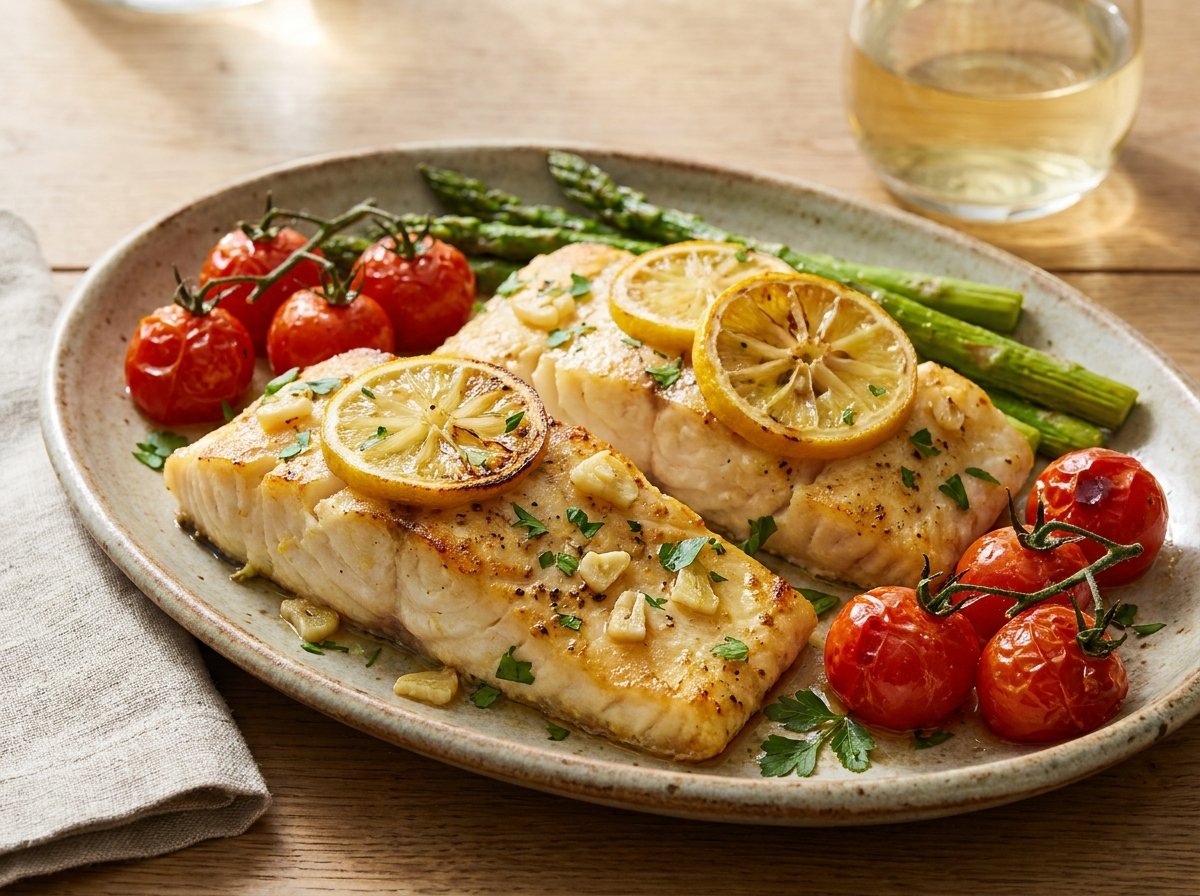
Use a spoon to spread some of the minced garlic and herbs across the tops of the fish. Place a few thin lemon slices around or on top of the fillets.
For even more flavor, add a few small pieces of butter directly over the fish before placing the dish in the oven.
At this stage, the cod should be generously coated but not submerged in liquid.
Covering the dish is usually unnecessary. Baking it uncovered allows the surface to cook more naturally and lets some of the sauce concentrate around the fish.
Baking the Cod
Place the baking dish in the preheated oven and bake for approximately 12–18 minutes, depending on the thickness of the fillets.
Thin fillets may cook faster, while thick center-cut pieces can require additional time.
Avoid repeatedly opening the oven. Every time you open the door, heat escapes and the cooking time becomes less predictable.
The fish is ready when the flesh turns opaque and flakes easily when gently pressed with a fork. For food safety, fish should reach a safe internal temperature; using an instant-read thermometer is the most reliable way to check.
Once cooked, remove the dish from the oven and let the cod rest for a couple of minutes.
Spoon some of the warm lemon garlic butter from the bottom of the dish over each fillet before serving.
How to Check for Doneness
The easiest visual sign is that the fish has changed from translucent to opaque and separates easily into flakes.
An instant-read thermometer gives a more precise check. Aim for an internal temperature of about 145°F (63°C) for fully cooked fish.
Try not to overbake the cod. Because cod is lean, excessive cooking can quickly make it dry. If your fillets are thin, begin checking them early rather than relying solely on the maximum suggested baking time.
Tips for Perfect Baked Cod
One of the most important tips is to dry the fish thoroughly before seasoning it. This simple step helps the butter and spices cling to the fillets and reduces excess liquid in the dish.
Another useful tip is to avoid drowning the cod in sauce. You want enough lemon garlic butter to keep the fish moist and flavorful, but the fillets should still have some exposed surface.
Fresh lemon also makes a difference. Bottled lemon juice can work, but fresh juice and zest create a much brighter flavor.
Do not chop the garlic too far in advance if you can avoid it. Freshly minced garlic releases an especially fragrant aroma into the butter.
Finally, garnish generously with fresh parsley just before serving. The green herbs add color and a fresh finish that balances the richness of the butter.
Common Mistakes to Avoid
The biggest mistake is overcooking the fish. Cod can go from perfectly tender to dry surprisingly quickly, particularly when the fillets are thin.
Another mistake is using extremely high heat for too long. A moderate oven temperature gives the center time to cook without turning the outside dry.
Do not skip the resting period completely. Even two or three minutes allows the juices and sauce to settle slightly.
Also avoid adding too much salt at the beginning. Butter, seafood, and seasonings can build plenty of flavor without excessive salt. It is easier to add more at the table than to fix an overly salty sauce.
Delicious Variations
Mediterranean-Style Lemon Garlic Cod
For a Mediterranean twist, add halved cherry tomatoes, sliced olives, and a little crumbled feta around the cod before baking. The tomatoes release their juices into the lemon garlic sauce, creating an incredibly flavorful mixture.
You can also add thinly sliced red onion, oregano, and fresh basil after baking. Serve the finished cod with couscous or crusty bread to soak up the sauce.
For a spicy version, increase the red pepper flakes and add a little smoked paprika. The combination of smoky spice, lemon, and garlic works particularly well with cod.
Another option is a parmesan-crusted version. Mix breadcrumbs with grated Parmesan, parsley, garlic powder, and a little olive oil, then sprinkle the mixture over the cod before baking. The topping becomes golden and crisp while the fish remains tender underneath.
If you prefer a creamy dish, stir a small amount of heavy cream into the lemon garlic sauce and bake the cod in the resulting creamy mixture. This version is especially good with pasta or mashed potatoes.
What to Serve With Baked Cod
There are countless ways to turn these baked cod fillets into a complete dinner.
For something simple, serve the fish with roasted potatoes and steamed green beans. The potatoes soak up the lemon garlic butter beautifully, while the green beans add freshness.
Rice is another excellent choice. White rice, basmati rice, or lemon-herb rice all work well. Spoon the extra sauce from the baking dish over the rice just before serving.
For a lighter meal, serve the cod with a large green salad, roasted asparagus, zucchini, or broccoli. The fresh vegetables help balance the richness of the butter.
Couscous is especially good with the Mediterranean variation. You can also serve the fish with crusty bread, which may be the simplest and most satisfying option of all because it allows you to collect every last drop of sauce.
For a family dinner, consider adding a simple side of mashed potatoes. The creamy potatoes and lemon garlic cod make an incredibly comforting combination.
Make-Ahead and Storage
You can prepare the lemon garlic sauce several hours ahead and keep it covered in the refrigerator. The cod can also be seasoned shortly before baking, but it is best not to leave raw fish sitting in acidic lemon juice for an extended period because the acid can affect its texture.
Cooked leftovers should be cooled promptly and stored in an airtight container in the refrigerator.
When reheating, use gentle heat. A low oven or covered skillet is preferable to very high heat because aggressive reheating can dry out cod quickly.
Leftover cod is also delicious flaked into a salad, mixed with rice, tucked into tacos, or added to pasta. A little leftover lemon garlic butter can be used as a sauce for vegetables or grains.
For the best texture, enjoy the leftovers promptly rather than keeping them for an extended period.
Conclusion
Lemon Garlic Baked Cod Seafood Fillets are proof that an easy seafood dinner can still feel elegant and satisfying. The combination of flaky cod, buttery richness, fresh lemon, aromatic garlic, and herbs creates a flavor profile that is bright enough for summer but comforting enough for a cozy family dinner.
The recipe is straightforward: dry the cod, season it, prepare the lemon garlic butter, pour it over the fillets, and bake until the fish is tender and fully cooked. From there, the possibilities are endless. Add tomatoes and olives for a Mediterranean version, breadcrumbs and Parmesan for crunch, or a touch of cream for something richer.
The most important thing is to watch the cooking time carefully. Cod is naturally lean, so perfectly baked cod should be moist and flaky, not dry. Serve it immediately with your favorite vegetables, rice, potatoes, or crusty bread, and make sure to spoon that golden lemon garlic butter over the top.
FAQ
Frequently Asked Questions
1. Can I use frozen cod for this recipe?
Yes. Frozen cod works very well, but thaw it completely in the refrigerator before cooking. Pat the fillets dry with paper towels to remove excess moisture before seasoning and baking.
2. How long should cod bake at 400°F?
Most cod fillets take approximately 12–18 minutes at 400°F (200°C), depending on their thickness. Start checking thinner fillets early. The most reliable way to confirm doneness is with an instant-read thermometer.
3. Can I make this recipe without butter?
Yes. You can replace the butter with additional olive oil for a lighter preparation. The flavor will be slightly different, but lemon, garlic, herbs, and olive oil pair beautifully with cod.
4. How do I keep baked cod from drying out?
Avoid overcooking it and start checking the fillets early. Patting the fish dry before cooking and coating it with the lemon garlic sauce also helps maintain moisture. Removing the fish from the oven as soon as it is fully cooked is essential.
5. What other fish can I use instead of cod?
Haddock, pollock, halibut, or another firm white fish can work well. Cooking time may vary depending on the thickness and type of fish, so use the fish’s appearance and internal temperature as your guide.