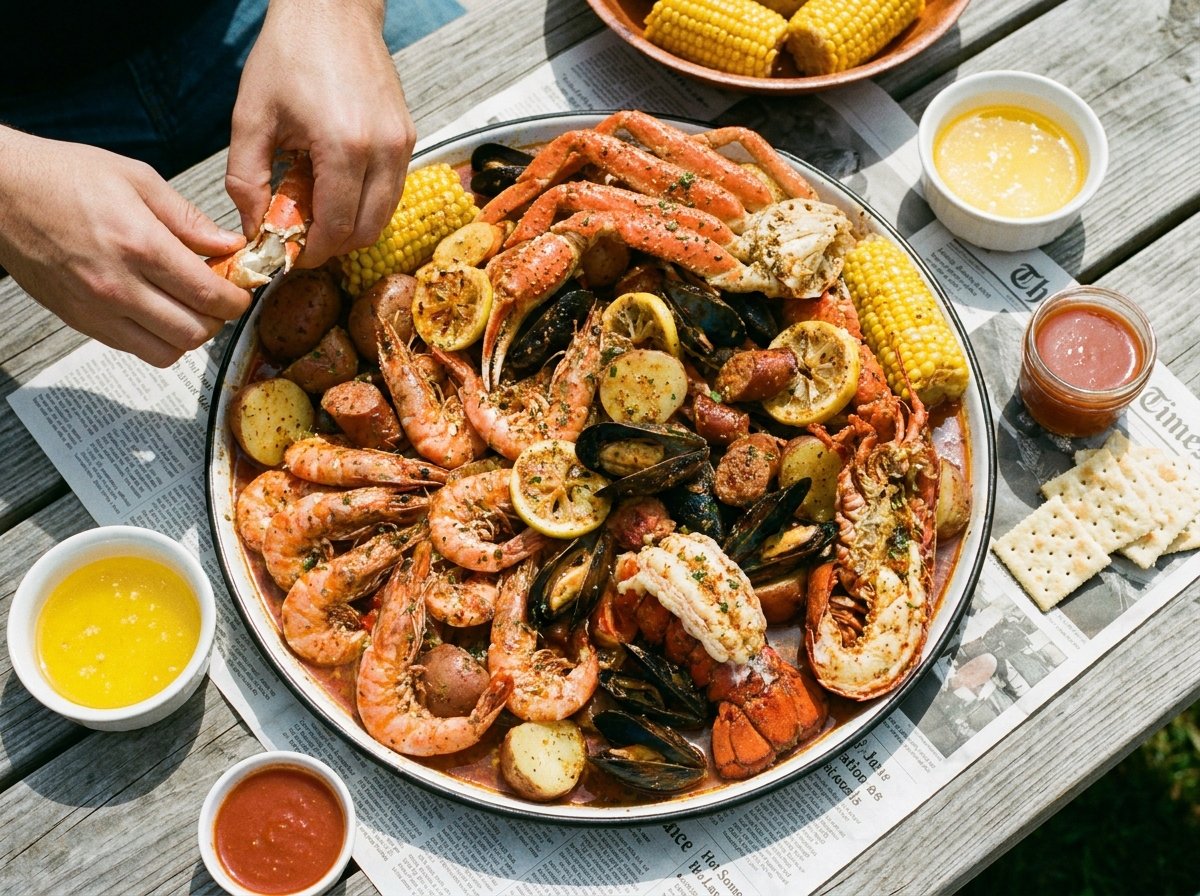
Garlic Butter Cajun Seafood Boil with Shrimp, Snow Crab, Mussels and Lobster
A Garlic Butter Cajun Seafood Boil is the kind of meal that turns dinner into an event. Juicy shrimp, sweet snow crab, tender lobster, and plump mussels are cooked with corn and potatoes, then tossed in a rich garlic butter sauce packed with Cajun seasoning. Everything comes together in one wonderfully messy, flavorful feast that is meant to be shared. You do not need complicated techniques or a long list of fancy ingredients; the real magic comes from layering the seafood, vegetables, spices, and buttery sauce.
The beauty of a seafood boil is its flexibility. You can make it spicy or mild, add sausage if you like, swap vegetables according to the season, or adjust the amount of garlic butter to suit your taste. The key is to avoid overcooking the seafood. Shrimp need only a few minutes, mussels should be cooked until their shells open, and lobster and crab should be heated carefully so their delicate meat stays tender. Once everything is cooked, pour the garlic butter sauce over the seafood and serve it straight from the pot or spread across a large platter.
Garlic Butter Cajun Seafood Boil Recipe
Ingredients for 4 people
- 500 g shrimp, shell-on if possible
- 500 g snow crab legs
- 1 whole lobster, split in half or cut into pieces
- 500 g mussels, cleaned
- 500 g baby potatoes
- 3 ears of corn, cut into pieces
- 1 lemon, sliced
- 1 onion, quartered
- 4 garlic cloves
- 2 bay leaves
- 2 tablespoons Cajun seasoning
- 1 teaspoon smoked paprika
- Salt
- Black pepper
- Water, as needed
For the garlic butter sauce
- 150 g unsalted butter
- 8 garlic cloves, finely minced
- 2 tablespoons Cajun seasoning
- 1 teaspoon smoked paprika
- 1 teaspoon Old Bay-style seafood seasoning, optional
- 1 tablespoon lemon juice
- 1 tablespoon chopped parsley
- 1 teaspoon honey, optional
- A pinch of chili flakes or cayenne, optional
How to Make the Seafood Boil
Start by preparing the seafood. Rinse the shrimp and remove the digestive vein if necessary. Clean the mussels thoroughly, pulling away their beards and discarding any cracked shells. If using frozen crab legs or lobster, thaw them safely in the refrigerator before cooking. Pat the shrimp and lobster dry so that excess water does not dilute the flavors.
Fill a large stockpot with enough water to comfortably hold the vegetables and seafood. Add the onion, lemon slices, garlic cloves, bay leaves, Cajun seasoning, smoked paprika, salt, and black pepper. Bring the seasoned water to a strong simmer.
Add the baby potatoes first because they require the longest cooking time. Simmer them for approximately 12 to 15 minutes, depending on their size. When they are beginning to become tender but are not completely cooked, add the corn and continue cooking for another 5 minutes.
Next, add the lobster pieces. Allow them to cook for several minutes before adding the crab legs, since the crab is usually already cooked and mainly needs to be heated through. Keep the liquid at a gentle boil rather than allowing it to rage aggressively.
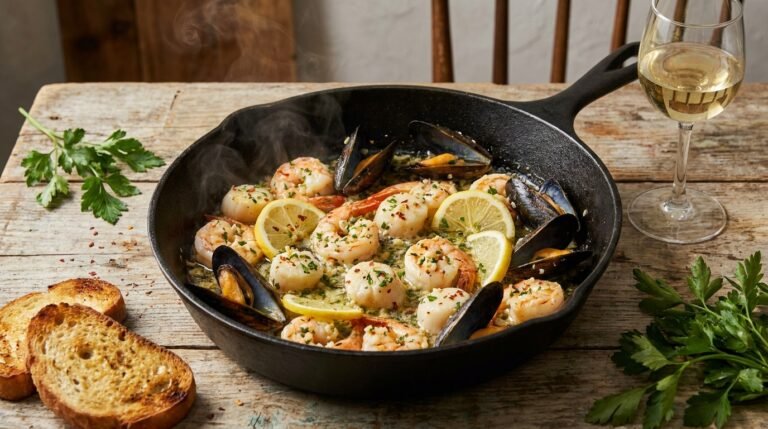
Add the mussels and shrimp near the end. Cover the pot and cook for approximately 3 to 5 minutes, until the shrimp are opaque and curled and the mussel shells have opened. Discard any mussels that remain closed after cooking.
Drain the seafood and vegetables thoroughly. Transfer everything to a very large serving platter, baking sheet, or bowl.
How to Make the Cajun Garlic Butter Sauce
While the seafood cooks, prepare the sauce. Melt the butter in a saucepan over low to medium heat. Add the minced garlic and cook gently for about 1 to 2 minutes. The garlic should become fragrant without turning dark brown, because burnt garlic can make the sauce bitter.
Add the Cajun seasoning, smoked paprika and optional seafood seasoning. Stir well so the spices become incorporated into the butter. Add the lemon juice and, if desired, a small amount of honey. The honey is not essential, but it creates a subtle sweet-and-savory balance that works beautifully with shrimp and lobster.
Taste the sauce and adjust the seasoning. If you enjoy heat, add cayenne pepper or chili flakes. Finish with freshly chopped parsley.
Pour approximately two-thirds of the garlic butter sauce over the cooked seafood. Toss or gently turn everything so the potatoes, corn and seafood become coated. Reserve the remaining sauce for dipping.
How to Keep the Seafood Tender
The biggest mistake when preparing a seafood boil is treating every ingredient as though it requires the same cooking time. Seafood cooks much faster than potatoes, so adding everything to the pot at once can leave you with overcooked shrimp and lobster before the vegetables are ready.
Start with ingredients that take longer and gradually add those that cook quickly. Potatoes go in first, followed by corn, lobster and crab, with shrimp and mussels toward the end. This simple timing strategy makes a significant difference.
Shrimp are particularly easy to overcook. Once they become opaque and form a loose C-shape, they are generally ready. If they curl tightly into a circle, they may have been cooked longer than necessary.
Lobster should also be handled carefully. The shell should become bright and the meat should turn opaque and firm, but avoid excessive cooking. If your lobster is particularly large, adjust the cooking time accordingly.
Choosing the Best Seafood
A seafood boil works beautifully with fresh or frozen ingredients. Fresh shrimp, mussels and lobster are wonderful when available, but high-quality frozen seafood can also produce an excellent result.
For shrimp, shell-on varieties are especially flavorful because the shells contribute additional seafood character to the cooking liquid. You can use peeled shrimp if convenience is more important.
Snow crab legs are usually sold precooked, so they require less cooking than raw seafood. Their purpose in the boil is primarily to become hot and absorb some of the Cajun flavors.
Mussels should smell clean and fresh before cooking. Their shells should close when handled or tapped. Discard cracked shells and any mussels that remain open after cooking.
How Spicy Should a Cajun Seafood Boil Be?
There is no single correct level of spice. A classic Cajun-inspired seafood boil can be boldly seasoned, but you can easily adjust the heat for your guests.
For a mild version, rely on Cajun seasoning and smoked paprika without adding cayenne. For medium heat, add a small pinch of chili flakes. If you want a fiery seafood boil, use cayenne pepper, hot sauce or fresh chili.
It is easier to increase the heat than reduce it, so add spicy ingredients gradually. The garlic butter sauce is the perfect place to control the heat because everyone can add extra sauce to their own serving.
What to Serve with a Seafood Boil
The seafood boil already contains potatoes and corn, so it can easily stand on its own. Still, a few simple sides can make the meal even more enjoyable.
A loaf of crusty bread is practically essential for soaking up the leftover garlic butter. A fresh green salad can provide a crisp contrast to the richness of the seafood and butter.
You can also serve lemon wedges, extra parsley and small bowls of the remaining sauce. If you want to expand the feast, coleslaw or a light cucumber salad works particularly well.
Easy Variations
One of the best things about a Cajun seafood boil is how easy it is to customize. Smoked sausage is a popular addition and brings a savory, smoky flavor that pairs naturally with the seafood. Slice it into thick pieces and add it alongside the corn.
You can also add vegetables such as onions, celery, green beans or mushrooms. If you prefer a sweeter flavor, extra corn is an easy choice.
For an extra-garlicky version, increase the garlic in the butter sauce. For a citrus-forward variation, add lemon zest along with the juice. A little fresh parsley or green onion at the end brightens the entire dish.
How to Serve a Seafood Boil
Part of the charm is the presentation. Spread the cooked seafood and vegetables across a large platter or a clean, food-safe serving surface. Pour the warm garlic butter sauce over everything and arrange lemon wedges around the edges.
Provide plenty of napkins because this is definitely a hands-on meal. Seafood crackers and small forks can make crab and lobster easier to eat.
If serving directly on a table, use an appropriate food-safe liner or large serving trays rather than placing food directly on an untreated surface. Keep the seafood hot while serving and avoid leaving perishable seafood at room temperature for extended periods.
Storage and Reheating
Seafood leftovers should be refrigerated promptly in shallow, airtight containers. Keep them chilled and use them within a short period, following standard food-safety practices.
When reheating, use gentle heat. A covered skillet over low heat works well, with a small splash of water or broth to prevent the seafood from drying out. Avoid repeatedly reheating the same portion.
The garlic butter sauce can be refrigerated separately and gently warmed before serving. Stir it well after reheating because the butter and other ingredients may separate.
Conclusion
This Garlic Butter Cajun Seafood Boil with Shrimp, Snow Crab, Mussels and Lobster is a spectacular centerpiece for a shared meal. The combination of sweet seafood, tender potatoes, juicy corn and bold Cajun garlic butter creates layers of flavor without requiring complicated cooking. The most important trick is simply to respect the different cooking times of each ingredient. Once everything is tender and perfectly cooked, the buttery sauce brings the whole feast together.
Serve it with plenty of lemon, crusty bread and extra garlic butter for dipping, and let everyone dig in. It is messy, generous and wonderfully satisfying—the kind of meal people remember long after the plates are empty.
FAQ
Can I use frozen seafood?
Yes. Frozen shrimp, crab and lobster can work very well. Thaw them safely in the refrigerator before cooking and drain away excess liquid.
Do I need to use all four types of seafood?
No. You can adapt the recipe according to what is available. Shrimp and crab alone make an excellent seafood boil, while scallops, clams or firm white fish can also be incorporated.
Can I add sausage?
Absolutely. Smoked sausage is a popular addition to Cajun-style seafood boils. Add sliced sausage during the vegetable stage so it has time to heat through and flavor the cooking liquid.
How do I know when the shrimp are done?
Shrimp are ready when they become opaque and firm and curl into a loose C-shape. Avoid cooking them until they form a tight circle, as this can indicate overcooking.
What should I do with leftover garlic butter?
Store it separately in the refrigerator and reheat it gently. It is also delicious with grilled bread, vegetables, chicken or additional seafood.